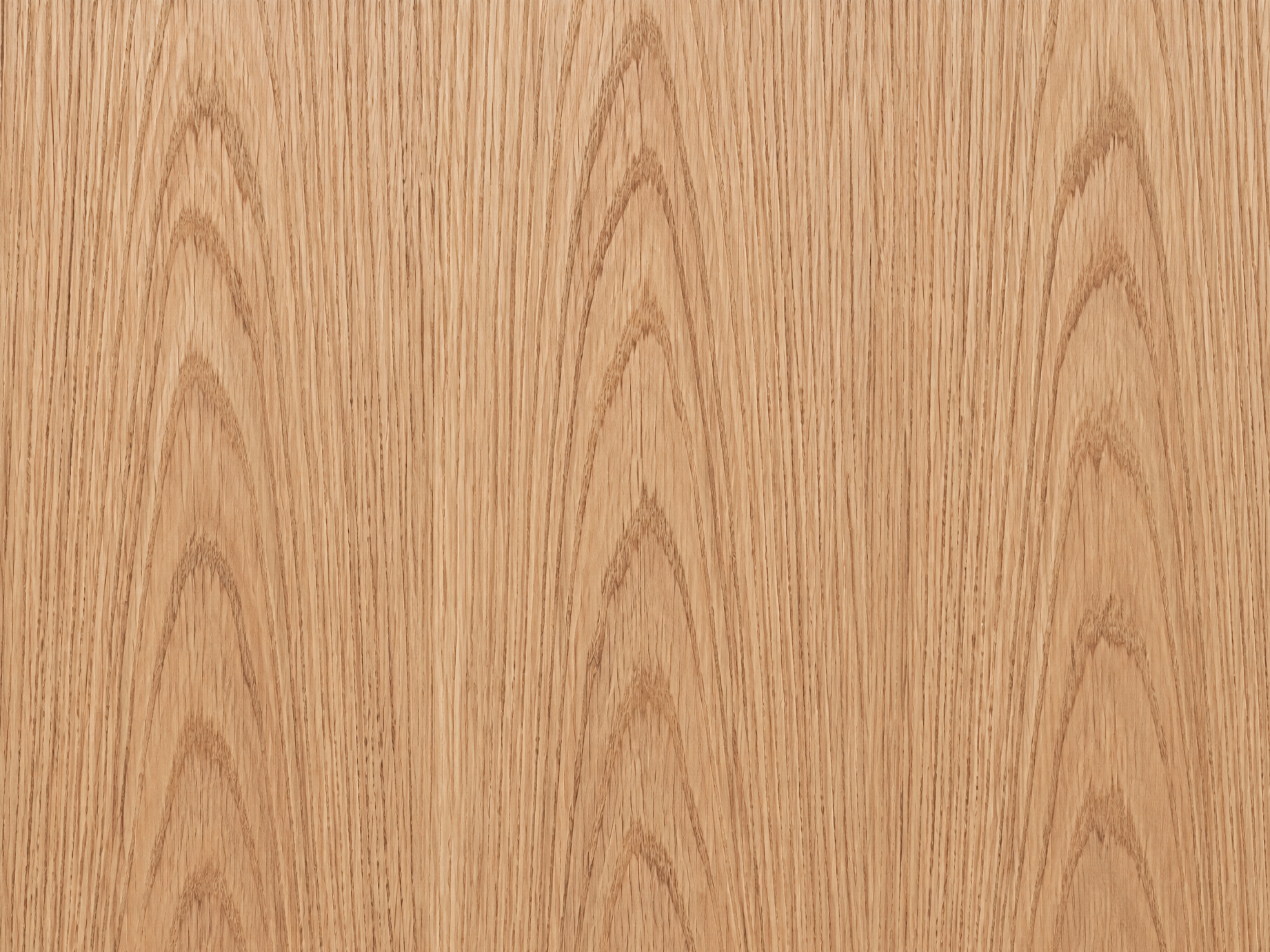
Plain Sliced (Default)
Default standard for traditional, transitional, and natural interiors. Delivers the most expressive, pronounced cathedral grain at the most economical cost.
Wood Veneer | Species Overview
Red oak is a warm, expressive species with a coarse, open grain and a broad color range — specified where visible grain and texture are part of the design intent.
Red oak is a warm, expressive species with a broad color range from light and medium brown to deeper red-brown tones. Its coarse, open grain gives the surface a strong wood texture that is effective where visible grain is part of the design intent.
Plain-sliced faces produce pronounced cathedral grain. Rift-cut and quarter-cut faces provide more linear alternatives. Red oak's open grain responds well to a broad range of stains and topcoats.
Default cut
Default match
Pore structure
Relative cost
Texture | Coarse, open grain |
Color range | Light warm tan to deeper red-brown |
Cuts available | Plain Sliced (default), Rotary, Quarter Sliced, Rift Cut |
Relative cost | Economical range |
Watch for | Cut selection, open pores, ray fleck |
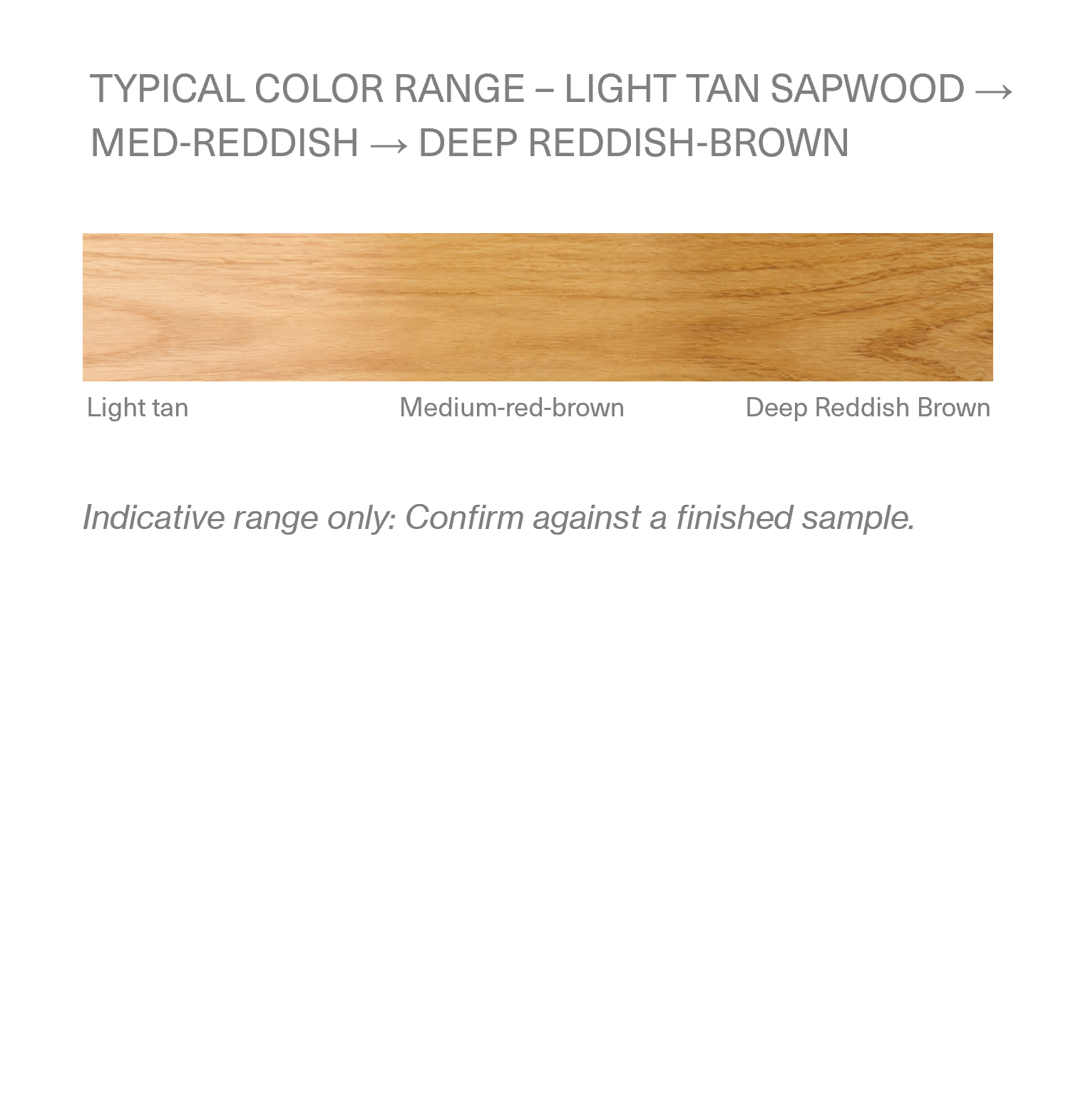
Warm red undertones across a light tan to red-brown range
Red oak ranges from light tan to deeper reddish-brown, with a warm color character and natural variation in tone across leaves and between flitches. Its warm red undertones distinguish it from white oak’s more neutral, gray-toned character. Color variation within the species is inherent and expected.
⚠ SPECIFICATION NOTE
Red oak’s open grain and pore structure means that finishes—clear or stained—will emphasize the grain texture and pore character as part of the finished surface. Pores will appear naturally darker, regardless of finish direction.
Coarse and open, with grain that stays present in the finished surface
Red oak has a coarse, open grain that is strongly present in the finished surface. Plain-sliced cuts produce pronounced cathedral grain patterns; rift and quarter cuts provide a more linear, controlled expression. The open pore structure gives red oak a strong tactile and visual texture that reads as expressive and natural.
In quarter-sliced red oak, cutting through the medullary rays produces ray fleck—natural feature. Specify whether ray fleck is desired, acceptable, limited, or prohibited. To minimize fleck, specify rift cut.
⚠ SPECIFICATION NOTE | STAIN ABSORPTION
Open pores accept stain readily and emphasize grain contrast. Pores will naturally appear darker than surrounding wood, contributing to a more textured finished appearance. This characteristic is inherent to the species and persists across most finish directions.
For a more neutral-toned oak with gray-olive undertones, see the White Oak Spec Brief. Red oak provides warmer, redder tones; white oak tends toward a cooler, more contemporary palette with similar open grain character.

Default standard for traditional, transitional, and natural interiors. Delivers the most expressive, pronounced cathedral grain at the most economical cost.
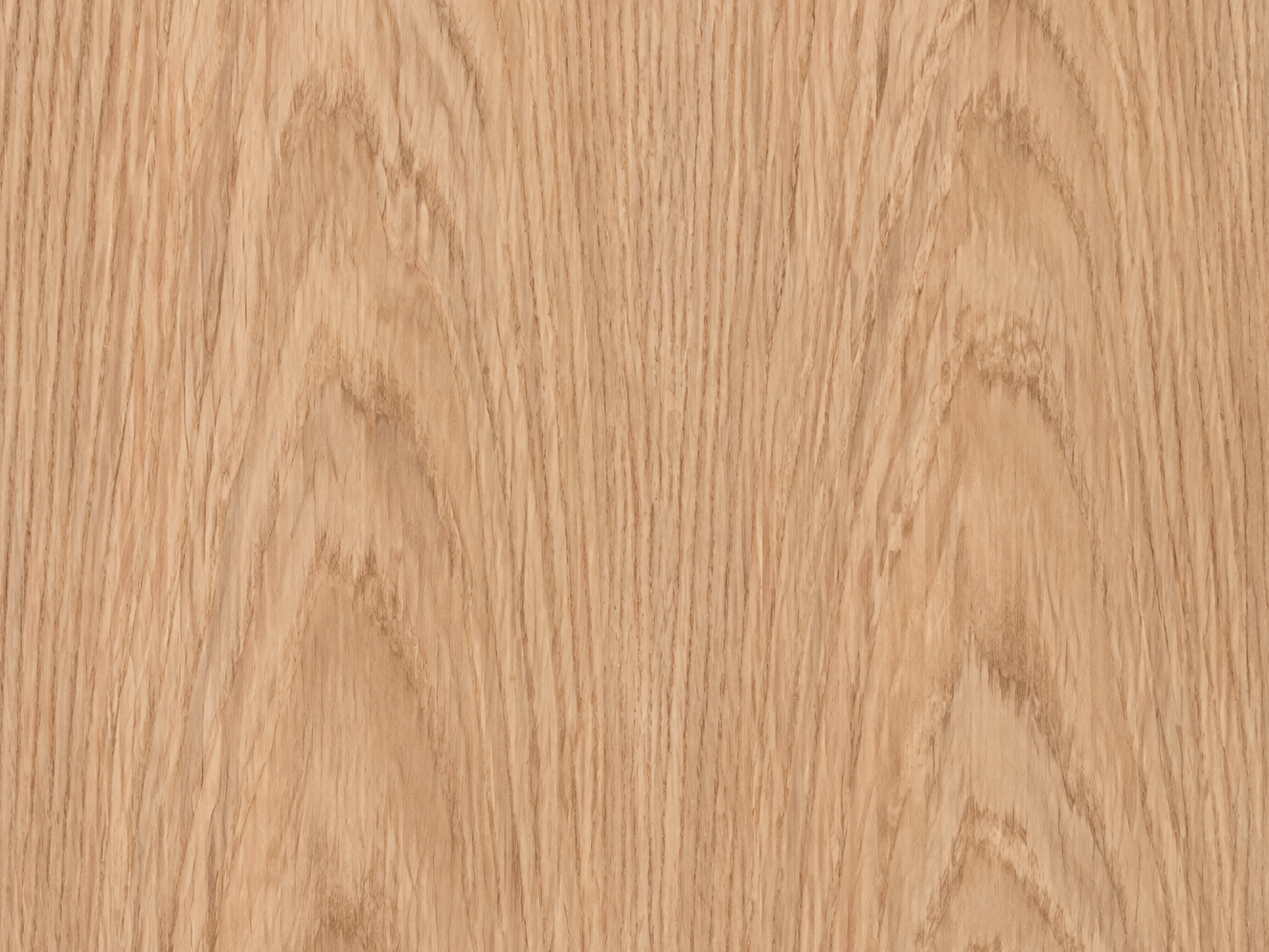
Cost-effective option with broad, flowing grain. Specified where more grain variation is acceptable or desired; confirm availability.
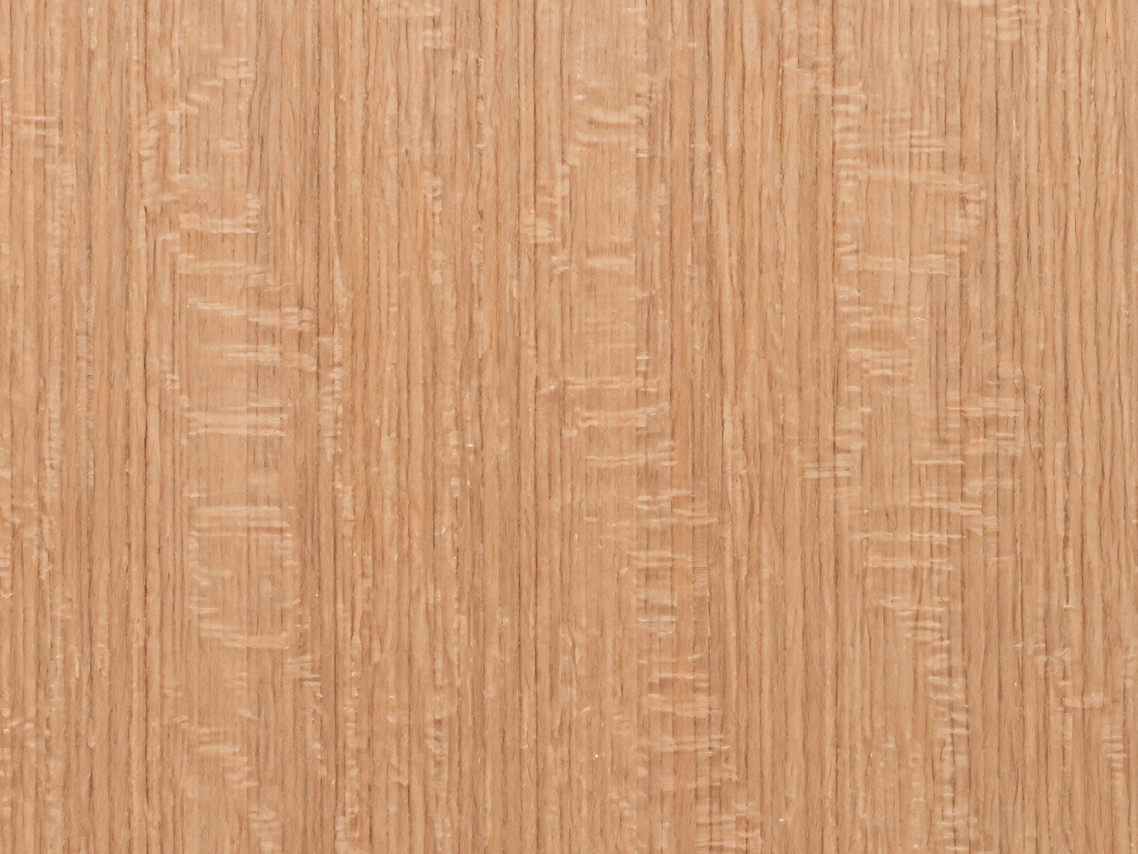
Straighter grain with pronounced medullary ray fleck. Specified where natural fleck is part of the design intent; lower yield than plain sliced.
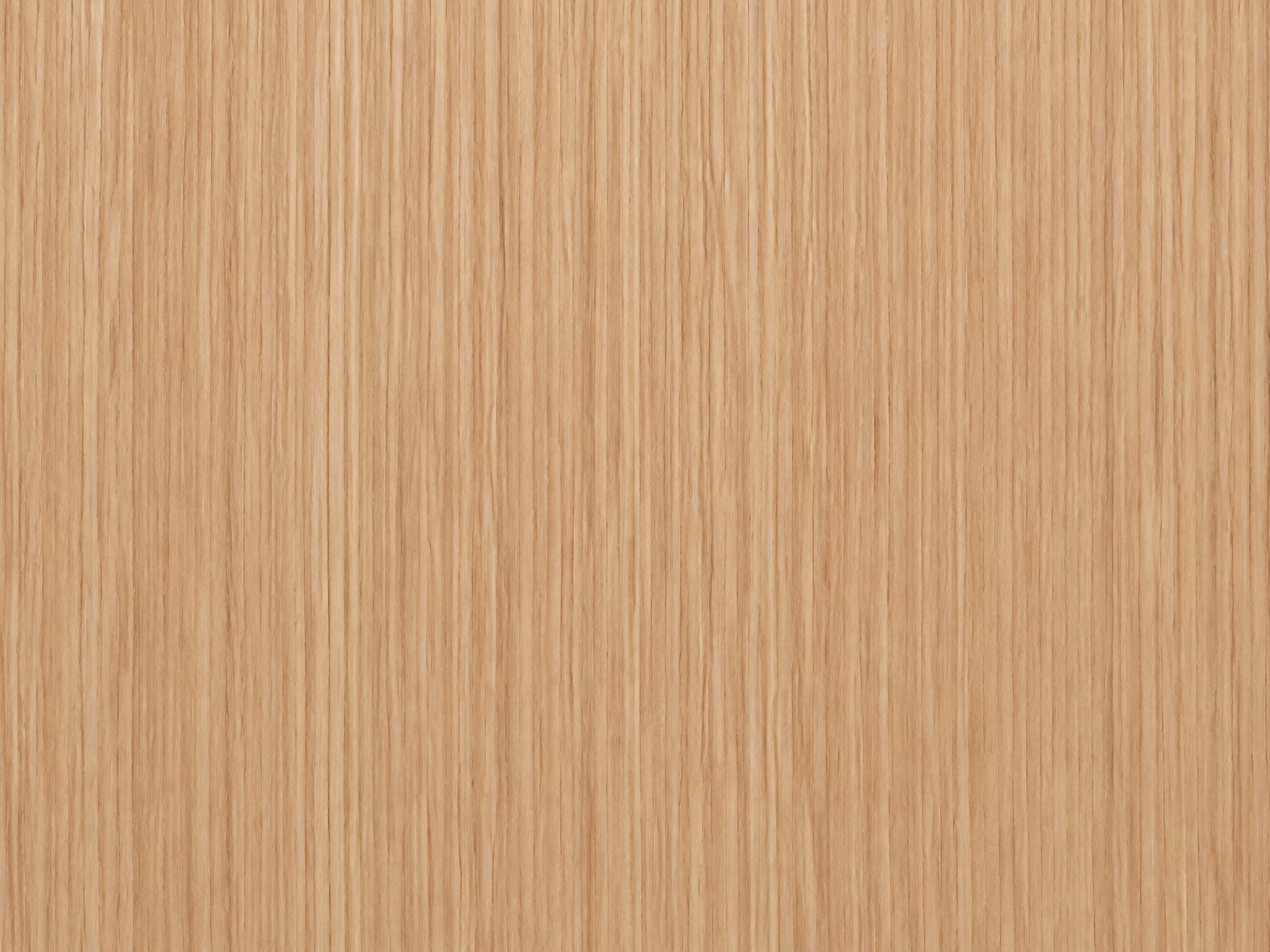
Tight, straight, vertical grain that minimizes ray fleck. Specified for contemporary, modern, and linear applications at a higher cost.
These are inherent to the species. Their acceptance is governed by the applicable WDMA face-grade table together with the project's approved visual standard.
CHARACTERISTIC | APPEARANCE | GRADE CONSIDERATION |
|---|---|---|
Color Variation | Light tan to deeper red-brown variation across face and between leaves | Allowable by grade; define acceptable color range |
Color Streaks/Spots | Irregular color changes or small concentrated color areas | Allowable by grade |
Figure | Irregular grain movement; may appear in plain-sliced and rotary faces | Not grade-controlled; can be valued as expressive character |
Ray Fleck/Flake | Medullary ray patterns visible in quarter-sliced cuts—silver-gray flecks crossing the grain | Natural in quarter-sliced; specify whether desired, acceptable, or limited; use rift cut to minimize |
Cross Bars | Faint horizontal bands crossing grain direction | Natural; cannot be fully eliminated |
Barber-Pole Effect | Alternating light/dark reflectivity in book match | Result of book matching; not a fabrication defect |
Small Burls/Pin Knots | Small circular or localized grain features | Allowable by grade; limited at AA |
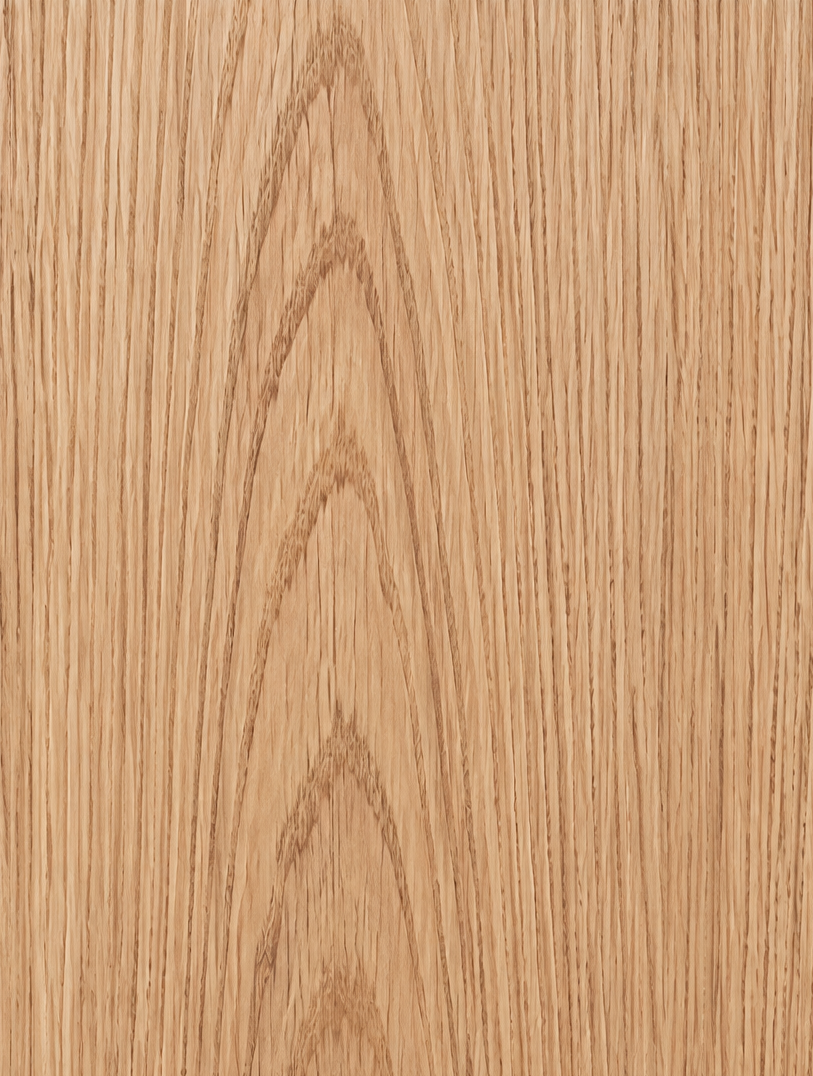
Preserves red oak’s natural warmth. Open pores and grain are fully visible, and the pores read as naturally darker.
Most natural – Use where grain expression is the intent.

Accepted readily, with good color depth while retaining grain character. Pores continue to read darker than the surrounding wood.
Good depth – Grain character retained.
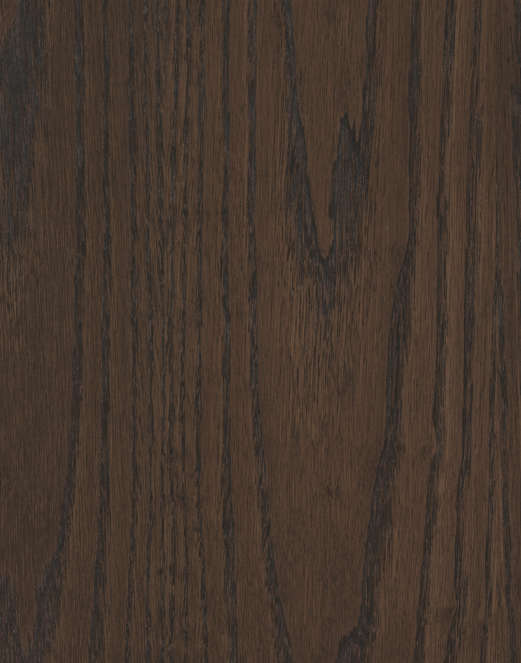
Accepted well, but the open pore structure stays visible and may create significant pore contrast. Evaluate on a finished 8”x10” sample.
Unifies color – Pore contrast remains.
01
Red oak’s coarse, open pore structure is integral to the species’ character. Finishes—including clear finishes—will not eliminate the pore texture or grain expression. Specifiers expecting a smooth, quiet, fine-grained surface should evaluate whether red oak is appropriate for the application before specifying.
Recommended response
Evaluate a finished sample showing red oak’s full grain and pore character alongside the intended finish before specifying. If a fine, smooth, low-texture surface is the priority, white maple, cherry, or walnut may be better suited to the design intent.
02
Plain-sliced red oak produces pronounced cathedral grain across the door face. Rift-cut produces a tight, straight, linear grain with minimal fleck. Quarter sliced produces a straighter grain with natural ray fleck. These are not minor variations—they produce substantially different visual outcomes from the same species specification.
Recommended response
Define the desired cut explicitly in the project specification. Review a finished 8"x10" sample of the specified cut before approving production. Do not assume that any oak cut is interchangeable in appearance; specify the cut that matches the design intent and confirm it is what will be produced.
03
Plain-sliced red oak can produce significant cathedral grain movement across a door face. While this expressive grain pattern is appropriate and valued in many traditional and transitional applications, it may conflict with design intents calling for a quiet, linear, or controlled surface.
Recommended response
If a quieter appearance is the design intent, specify rift-cut red oak for the most linear expression, or quarter-sliced for a straighter grain with natural ray fleck. Confirm the cut selection with a finished 8"x10" sample before approving production.