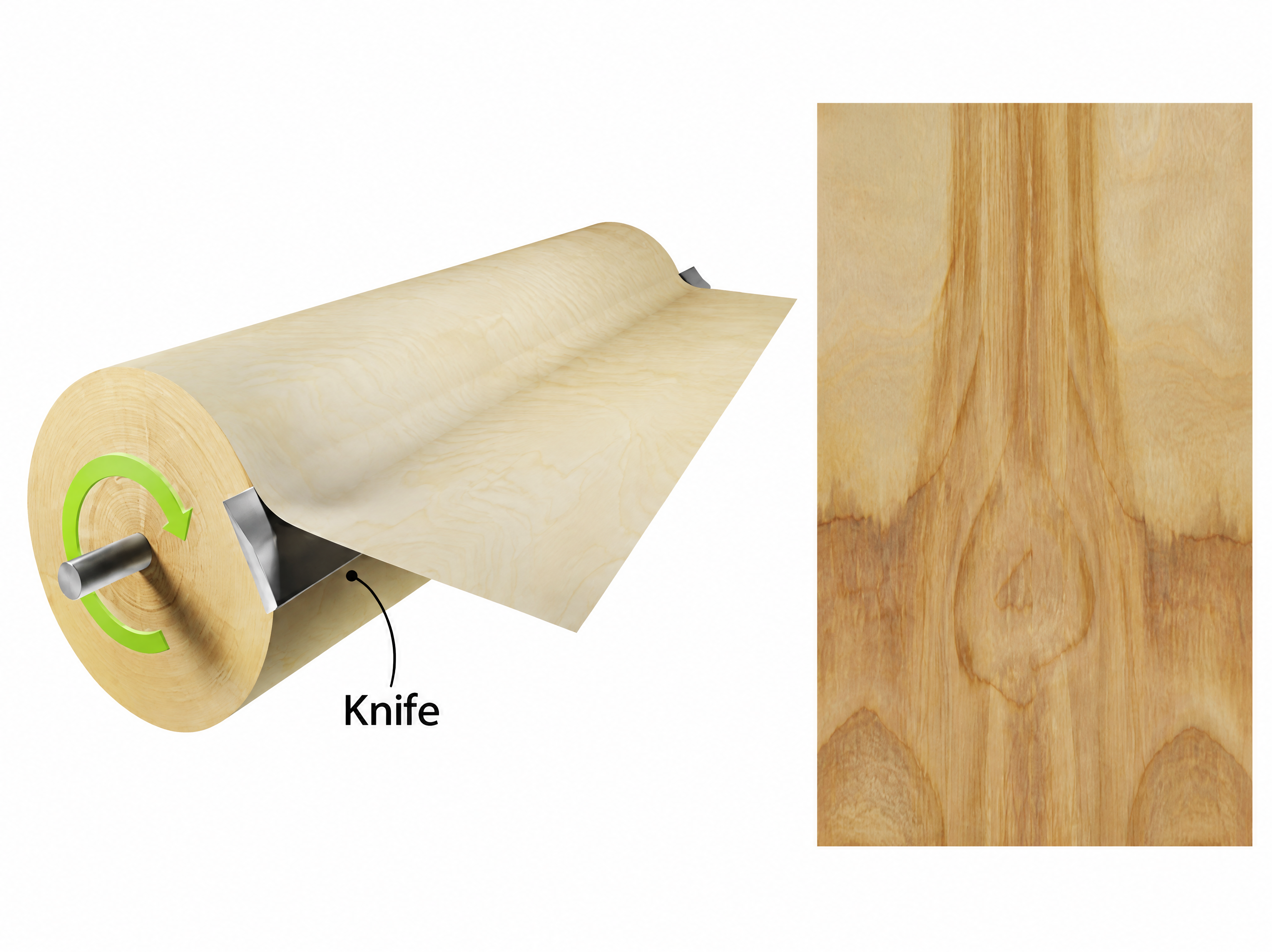
Rotary Cut
Continuous cut producing wide, sweeping grain and active natural variation across leaves. Delivers the greatest material yield from the log. Most economical cut, often specified on budget-conscious commercial projects.

How Veneer is Sliced, Matched, and Assembled Across the Face
Selecting your wood veneer is only the first step. Translating that choice into a finished door depends entirely on how the natural wood is cut, matched, and assembled across the opening. How a log is sliced into leaves, how adjacent leaves join together, and how they are organized across the face are three distinct decisions that directly shape your installed design.
Explore the four primary veneer cuts, compare the distinct visual rhythms of book and slip matching, and understand how face assembly controls balance and symmetry from center to edge. Whether you are aiming for formal, book-matched symmetry, clean and repeating linear grain, or seamless continuity across pairs and transoms, use this guide to align what you draw with what gets built.

Decision | What It Controls | Visual Impact |
|---|---|---|
Veneer Cut | The grain and figure of each veneer leaf, determined by how the log is cut relative to its growth rings. | Establishes the underlying grain character—from broad, sweeping patterns to straighter, more linear grain. |
Veneer Match | The relationship between adjacent leaves when they are spliced together. | Creates repeating, mirrored, or varied patterns across the veneer face. |
Assembly on the Door Face | The width, number, and placement of the spliced leaves within the door face. | Determines whether the overall composition appears continuous, balanced, or centered. |
Continuous cut producing wide, sweeping grain and active natural variation across leaves. Delivers the greatest material yield from the log. Most economical cut, often specified on budget-conscious commercial projects.
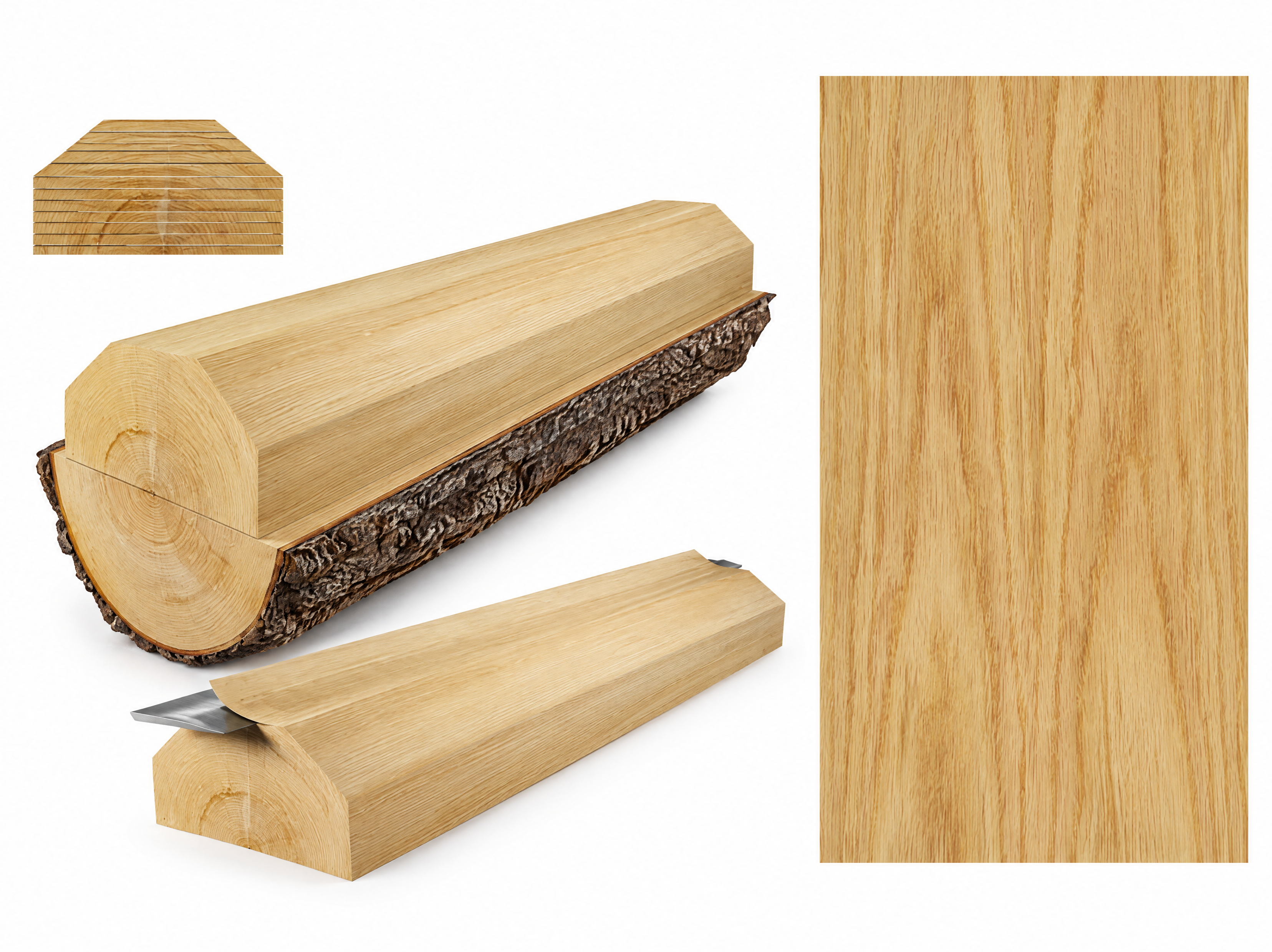
Distinctive cathedral peaks flanked by straight grain, sliced tangent to the growth rings. Delivers moderate log yield with a recognizable, repeating rhythm across leaves. The industry’s most popular architectural cut, offering a moderate cost position across diverse project types. Also known as Flat Cut.
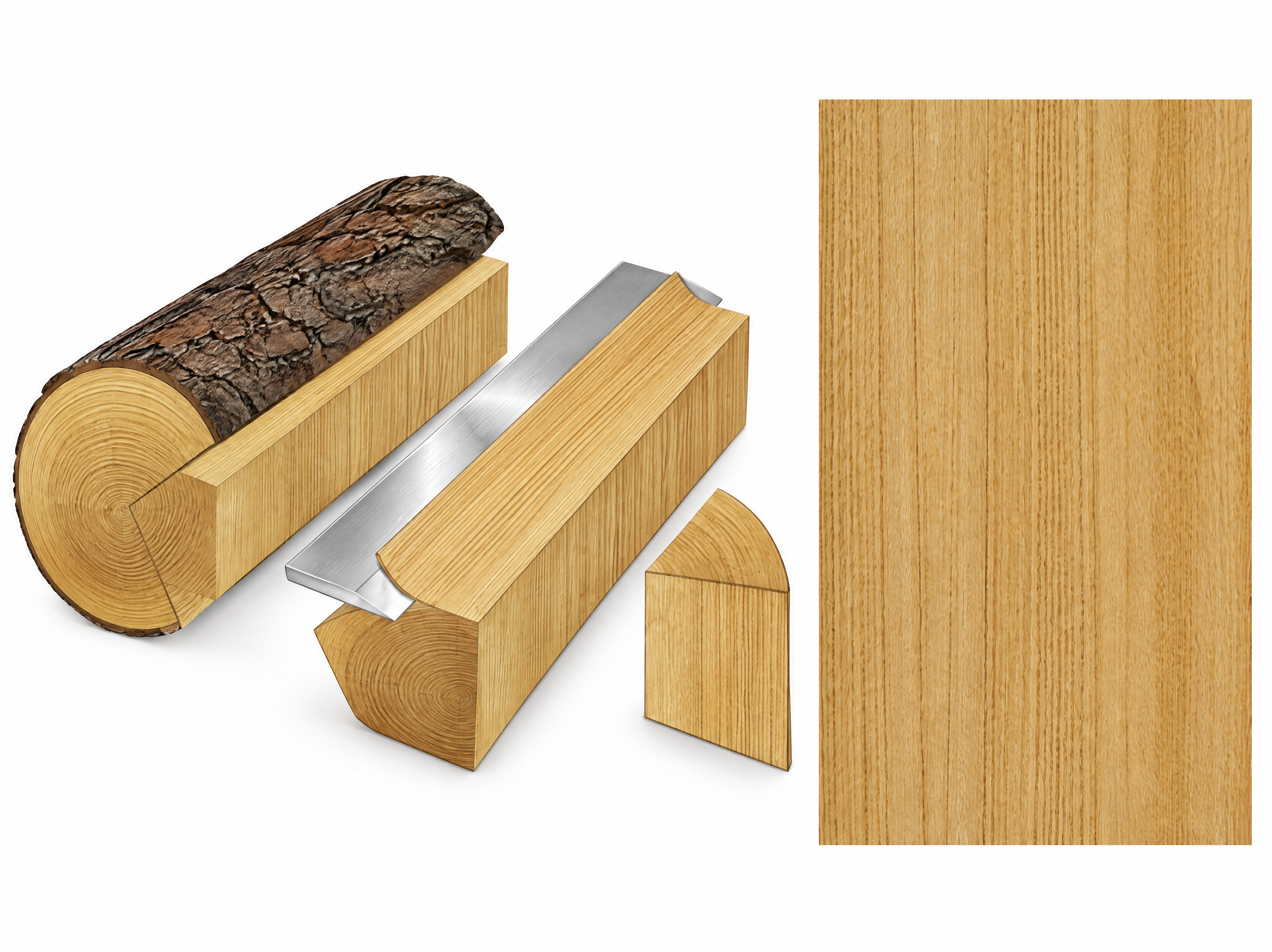
Straight, linear grain sliced radially perpendicular to growth rings, eliminating cathedral arches and producing distinct ray fleck in oak. Delivers lower material yield with narrower leaves and high visual control. Higher-cost cut, often specified for contemporary and formal interiors requiring clean, uniform alignment.
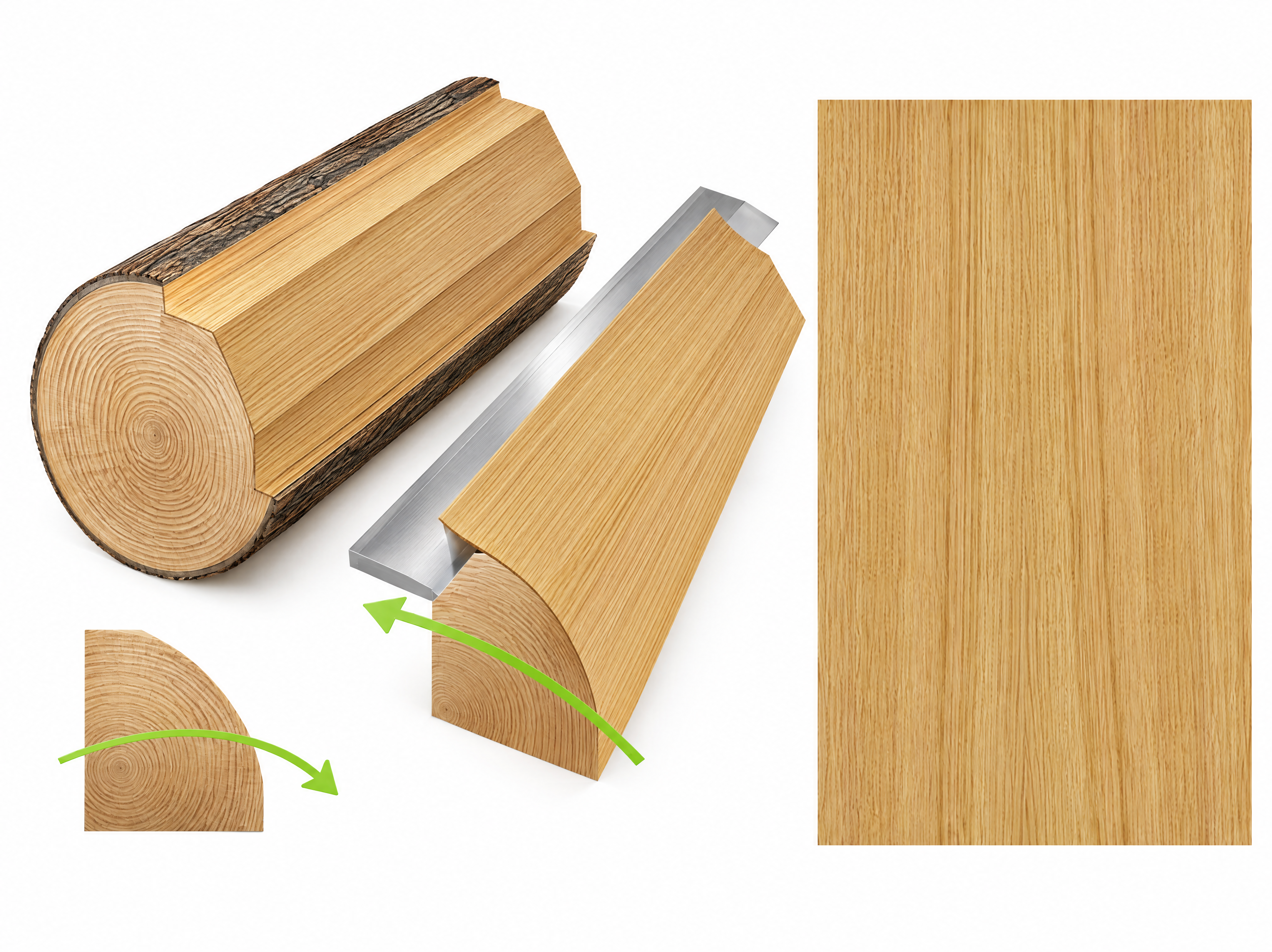
Clean, ultra-straight vertical grain sliced at an angle to suppress medullary ray flecks and maximize linear uniformity. Delivers lower yield and narrower leaves from the log. Tends to carry a premium cost position, favored in red and white oak for refined modern spaces requiring sharp, quiet architectural lines.
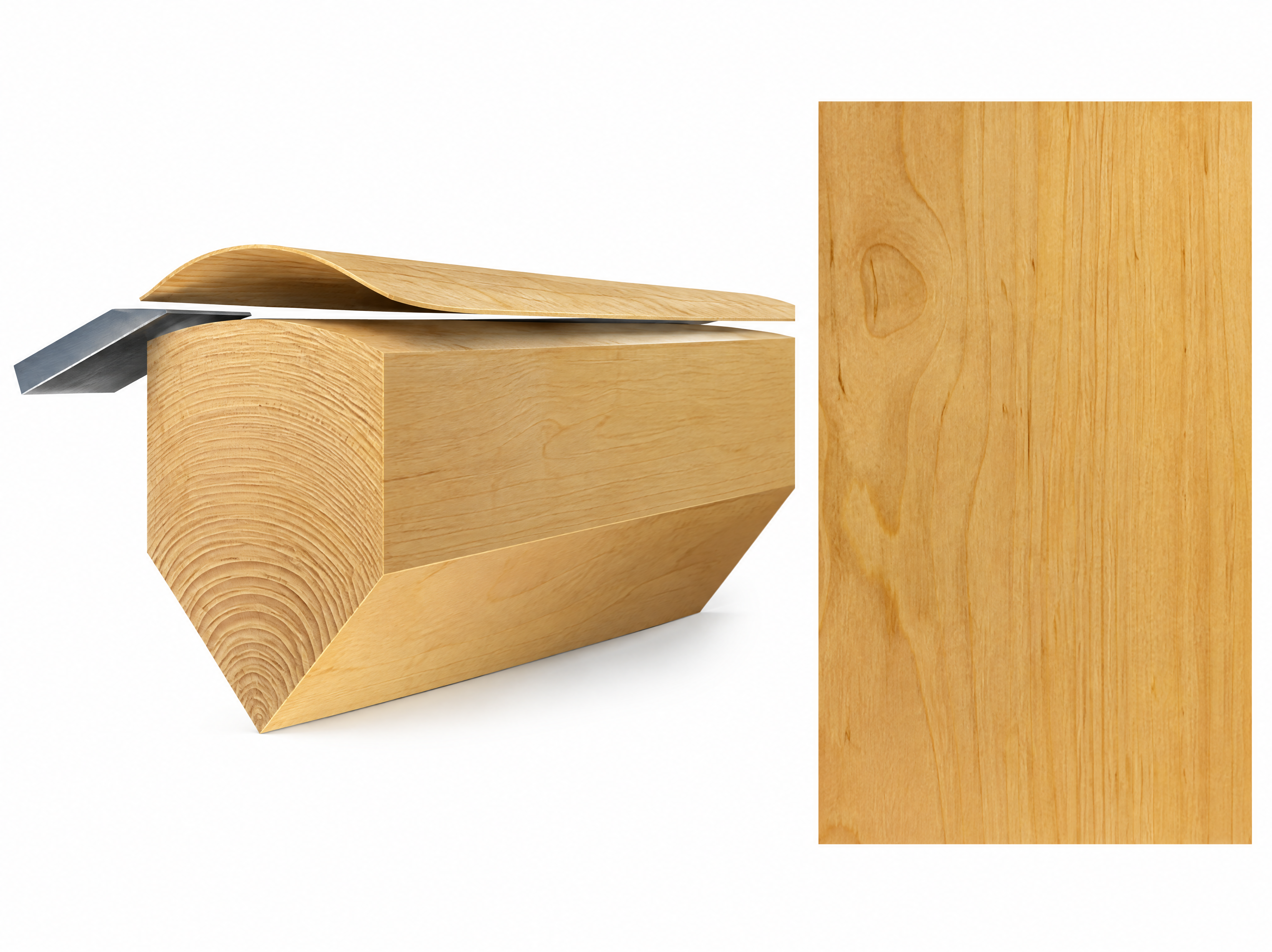
Less commonly specified than standard sliced veneer, this cut turns a half-log on a lathe to create broad grain that bridges rotary and plain-sliced aesthetics. Delivers high material yield at a moderate cost position. Favored for expressive spaces desiring wide figure over strict linear alignment.
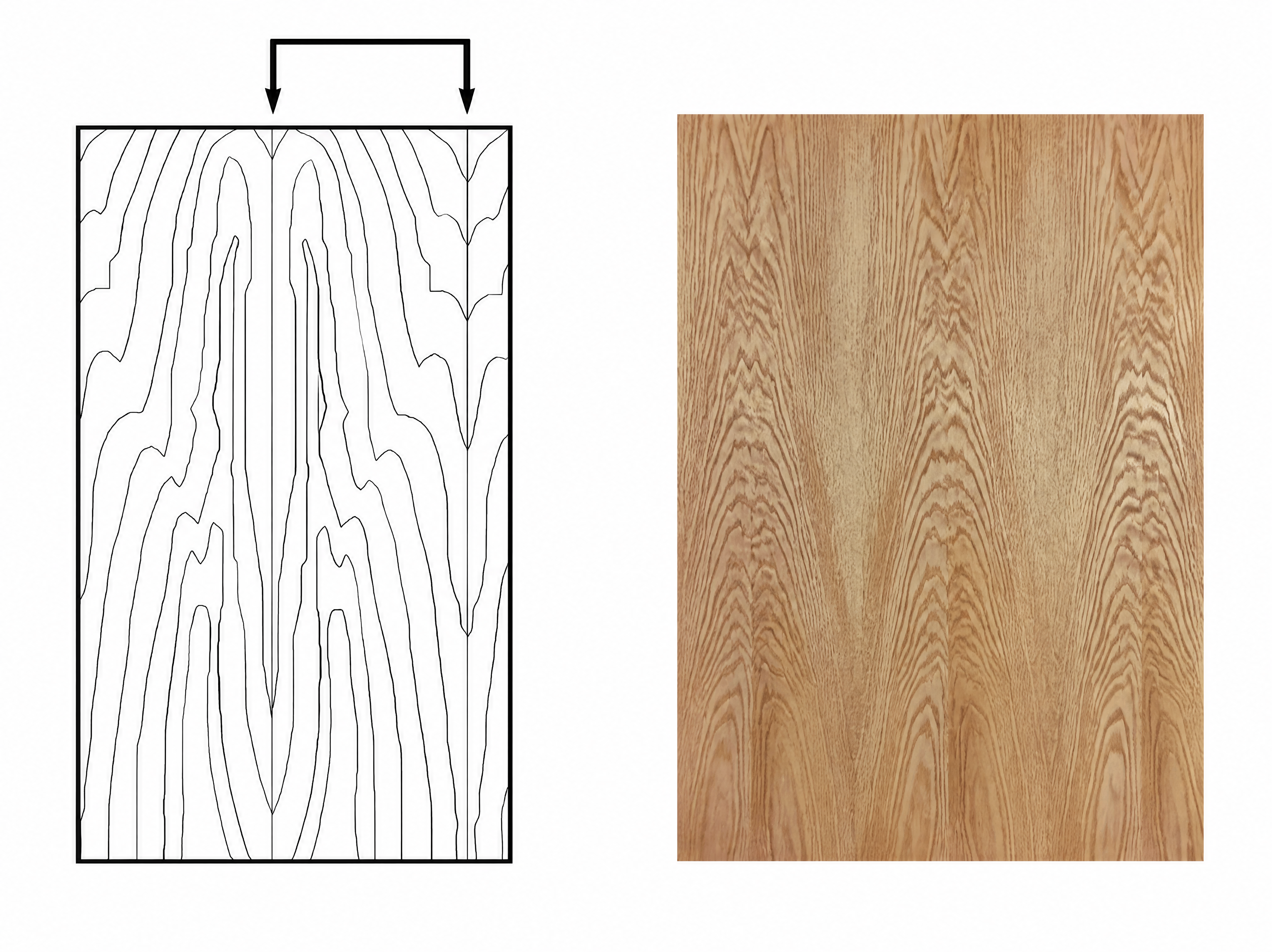
Alternating leaves are flipped to create a mirrored grain pattern at every joint. The industry default for plain-sliced veneer. Alternating tight and loose faces can produce a barber-pole light-and-dark effect — not a defect.
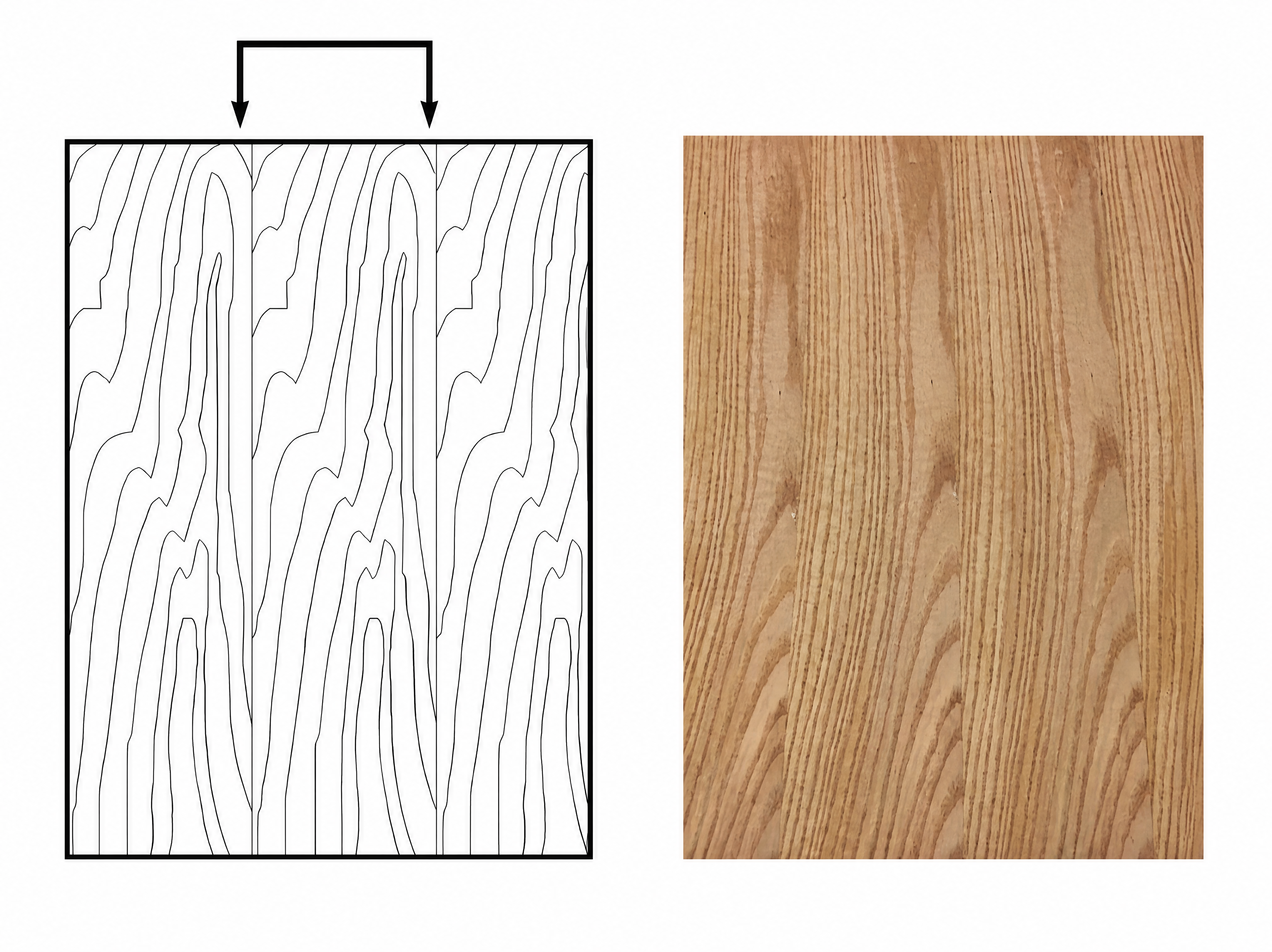
Leaves are placed in sequence without flipping, creating repeating grain without a mirror image. The default for quarter-sliced and rift-cut veneers to minimize barber-poling. Color variation may still repeat, and sharp contrasts at splice joints are possible.
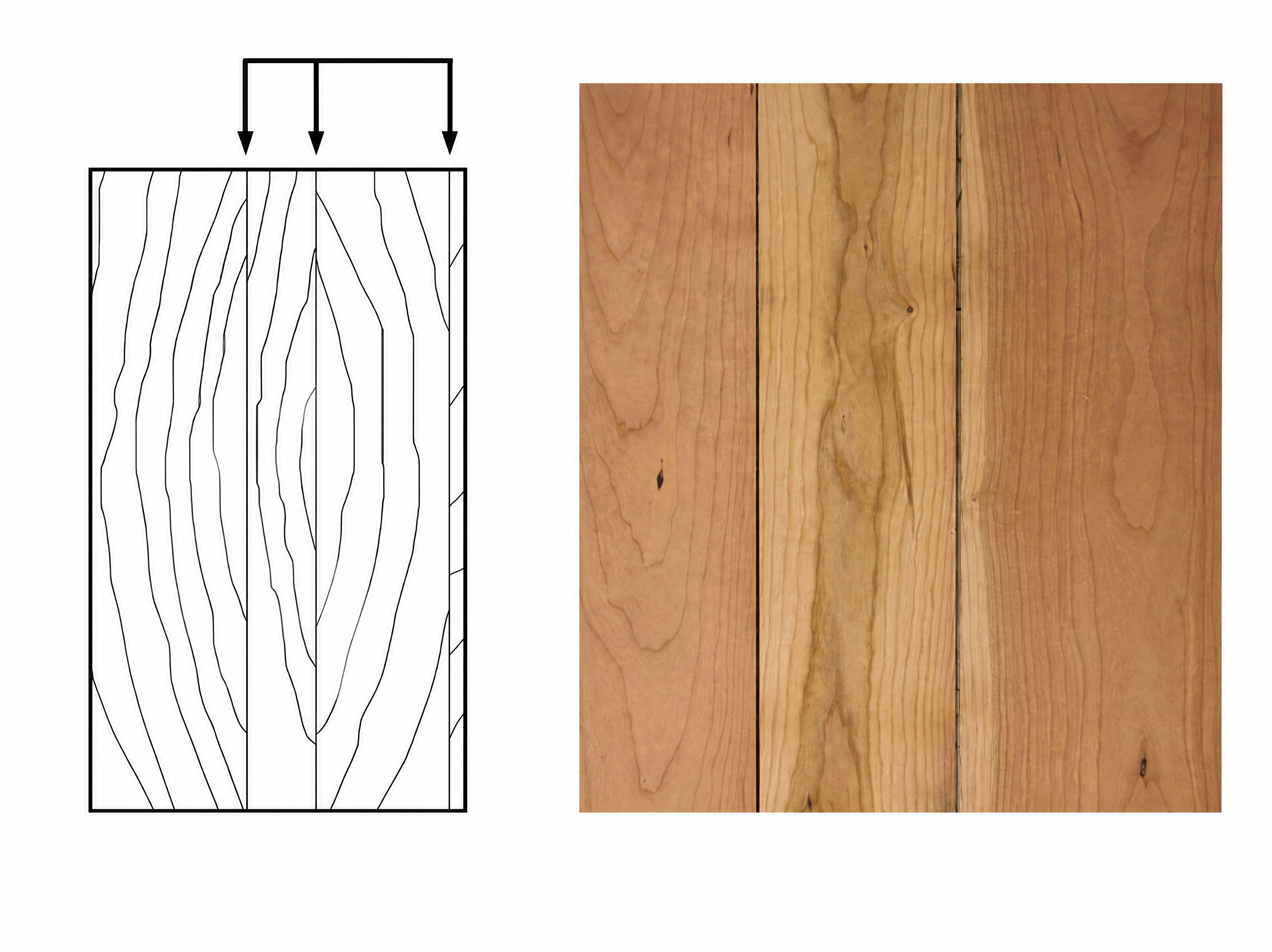
Leaves are selected without a fixed sequence, producing a board-like, varied surface that embraces natural color and grain differences. Best where organic variation is intentional and a continuous or symmetrical elevation is not required.
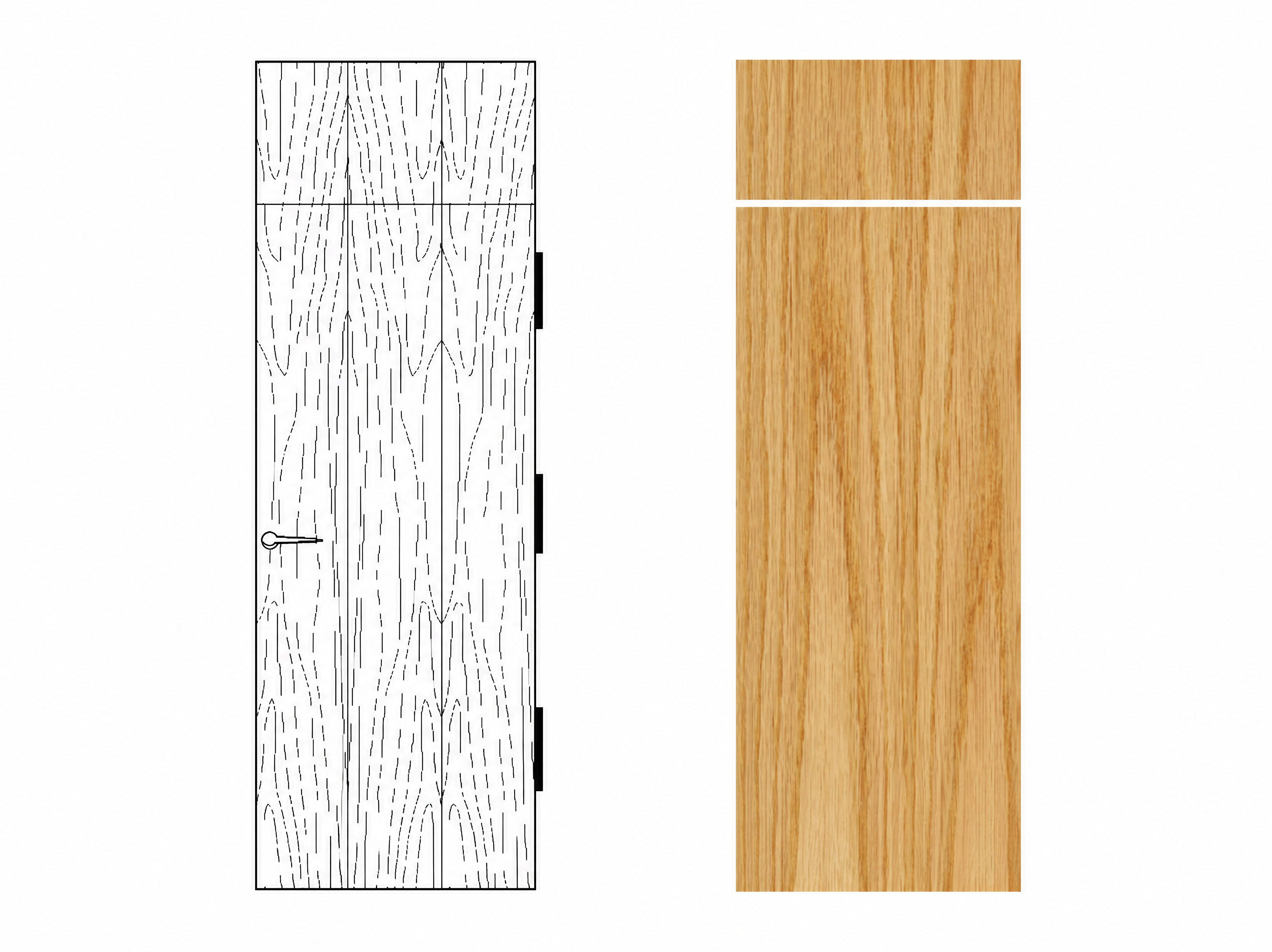
A single veneer sequence runs uninterrupted from the bottom of the door through the transom, creating one cohesive vertical surface. Ideal for high-visibility entries and designs coordinated with adjacent millwork. Veneer leaf length availability must be confirmed with the manufacturer early in the design process.
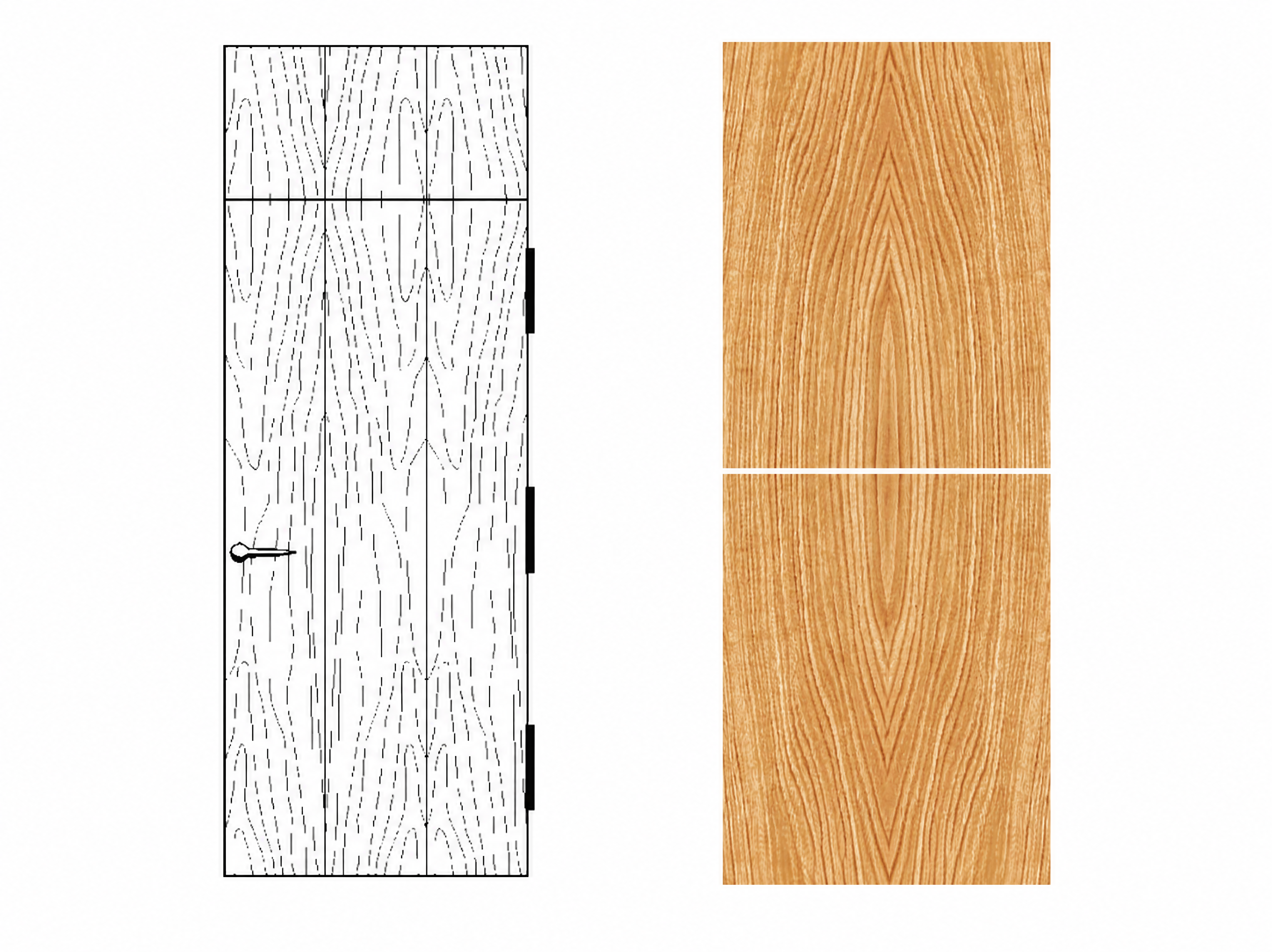
Grain flows up the door, then turns at the transom joint to create a deliberate mirrored reflection. Used when a coordinated grain relationship across the opening is desired but a full continuous run is not feasible. The mirrored transition is intentional — not a seamless grain flow.
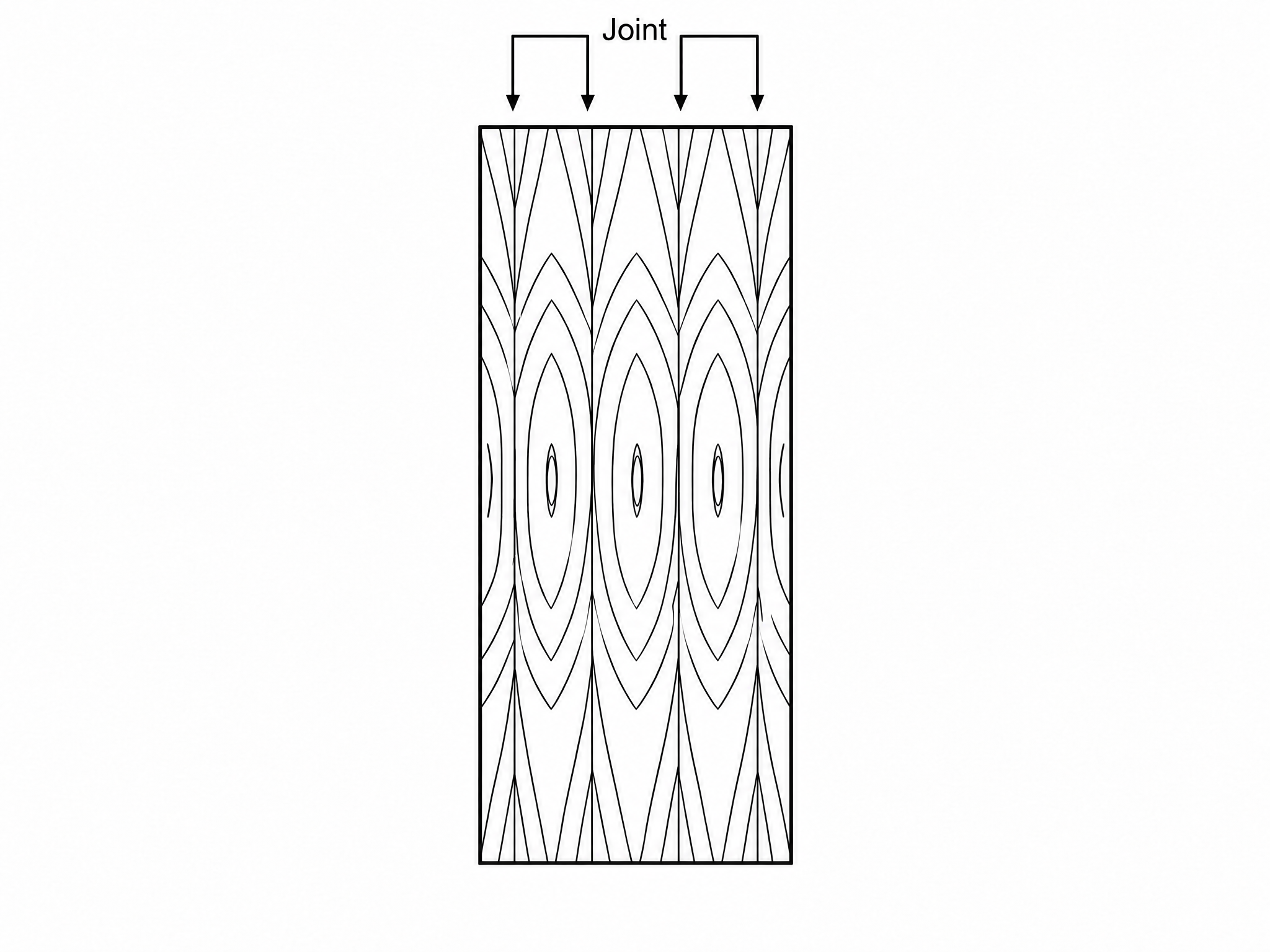
The industry default — leaves fill the door width as needed, making it the most economical and highest-yield assembly option. Joints and edge widths won't be centered or equal unless you specify otherwise.
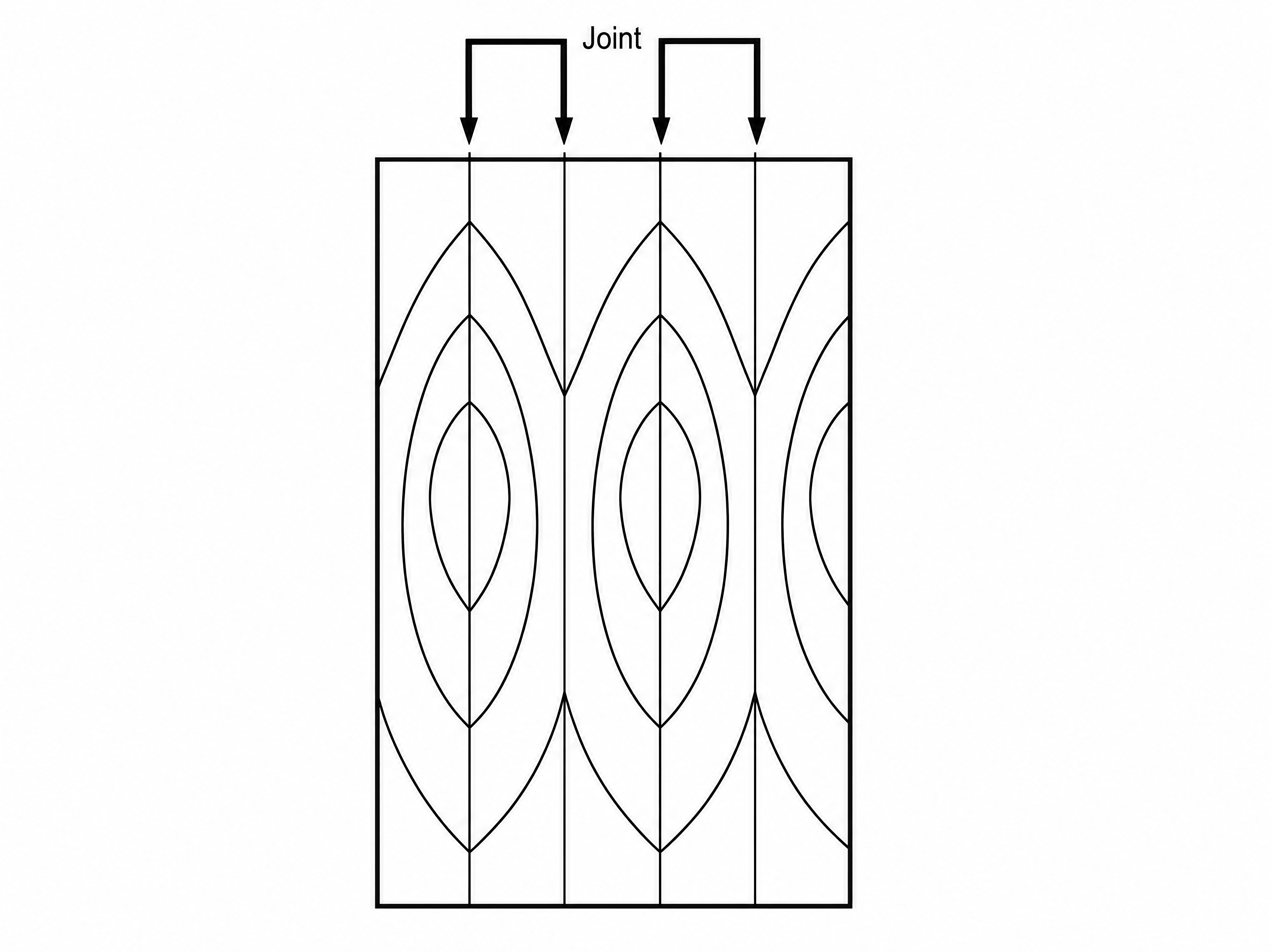
Equal-width leaves, symmetrically arranged across the face, at a moderate cost premium over running match. The right starting point when visual order matters — but flitch sourcing and sequence planning can make or break the result.
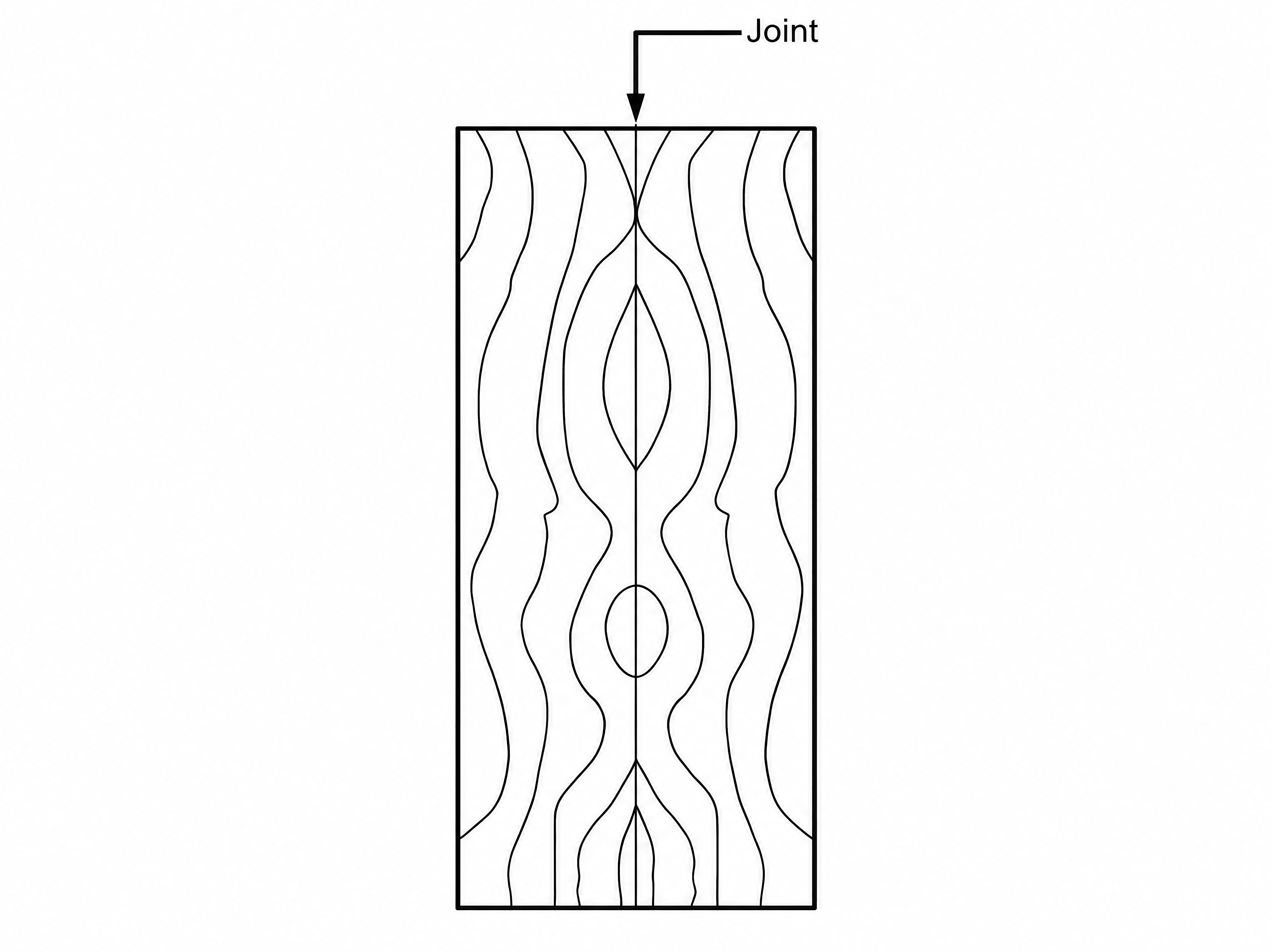
An even number of uniform leaves centered on a joint — not a leaf — for a precise, mirror-image face. The most controlled single-door layout, and the most labor-intensive. Know what you're paying for before you spec it.
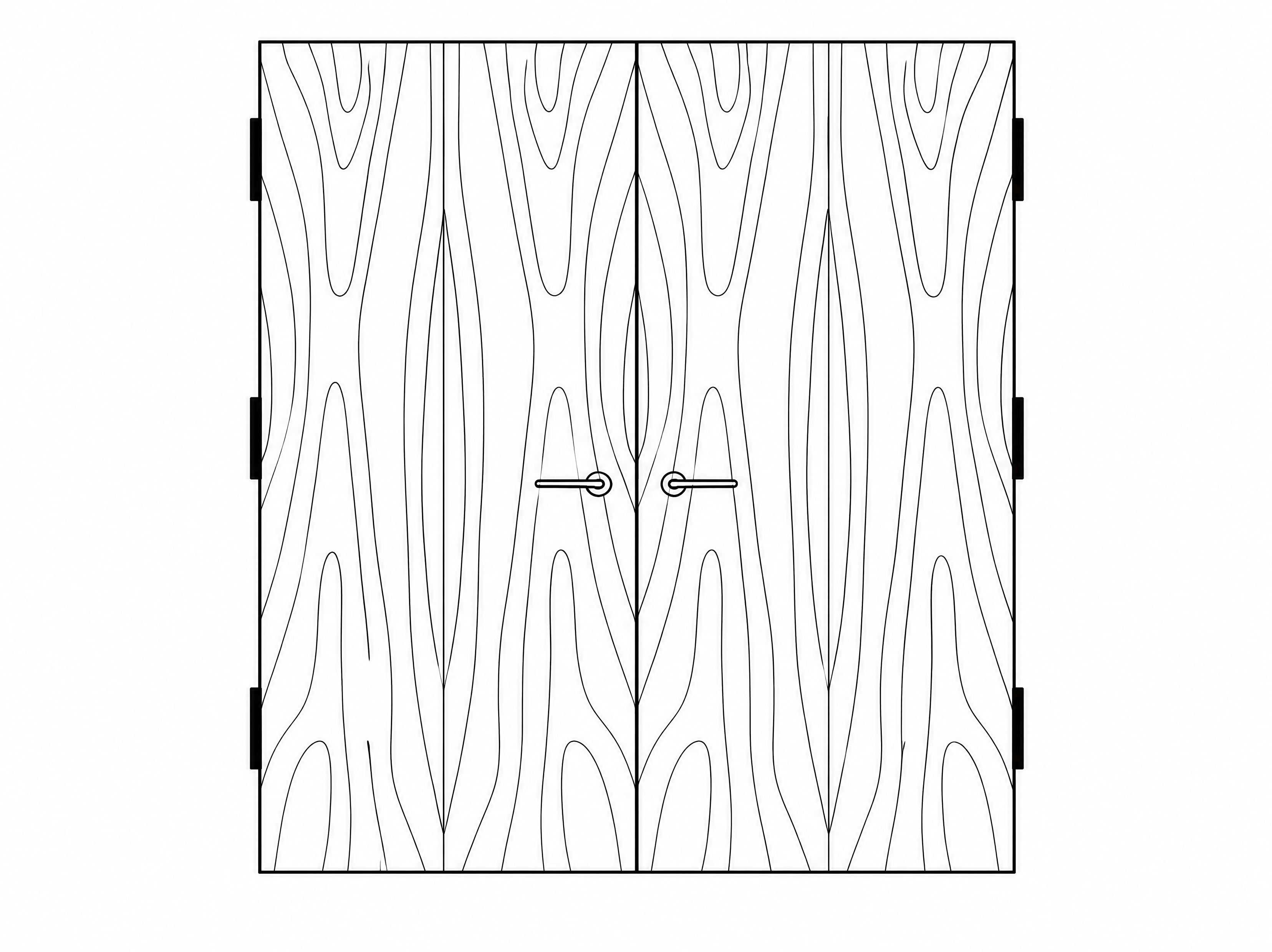
Grain that reads continuously across two adjacent doors when closed. Can be Center, Book or Balanced Matched to the other leaf in the pair. Requires explicit specification and careful coordination at every paired opening.
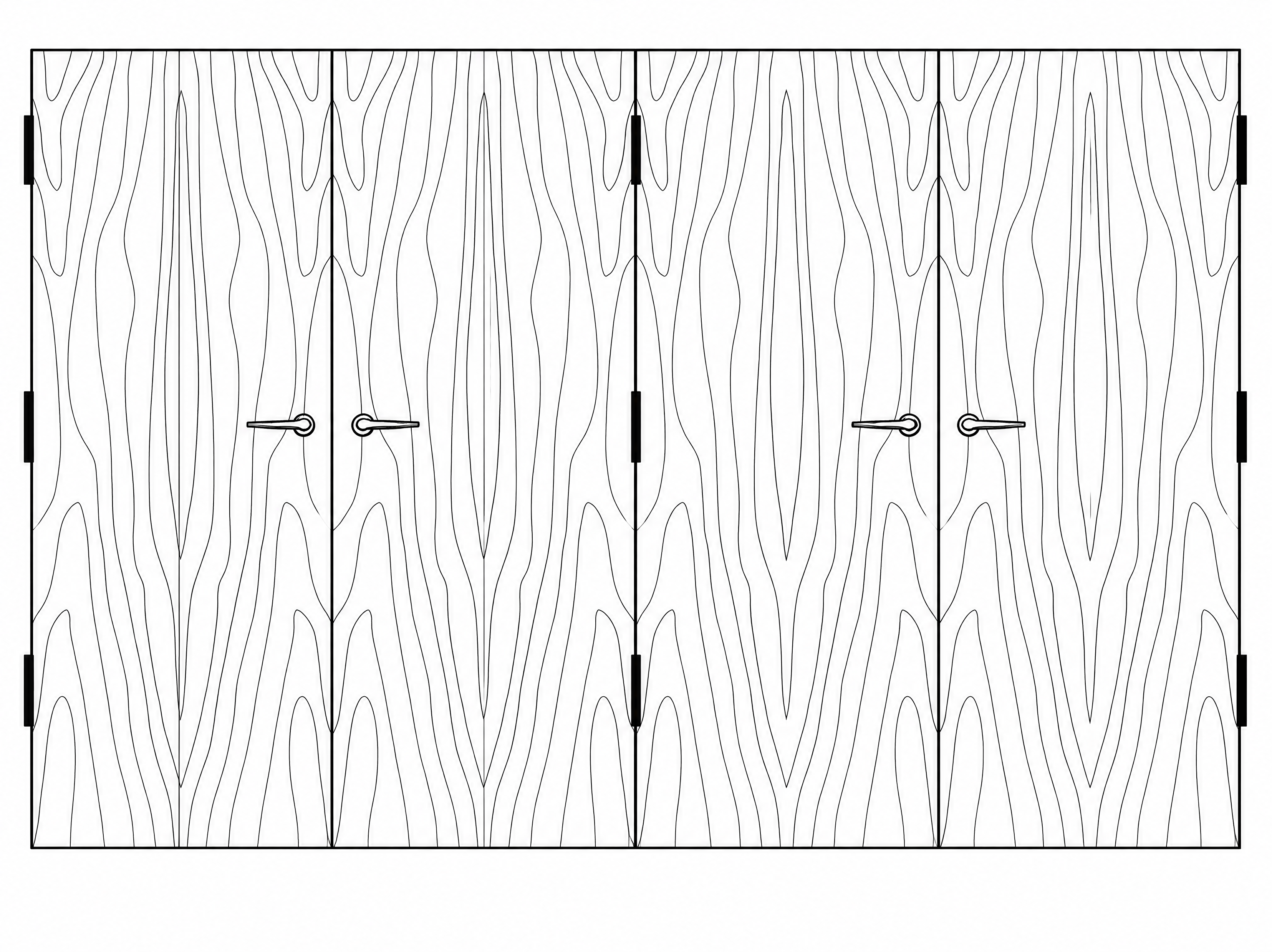
A single, unbroken grain flow across an entire bank of doors — the most visually ambitious multi-door assembly. Lowest yield, highest complexity, and a few important limitations worth understanding before committing.
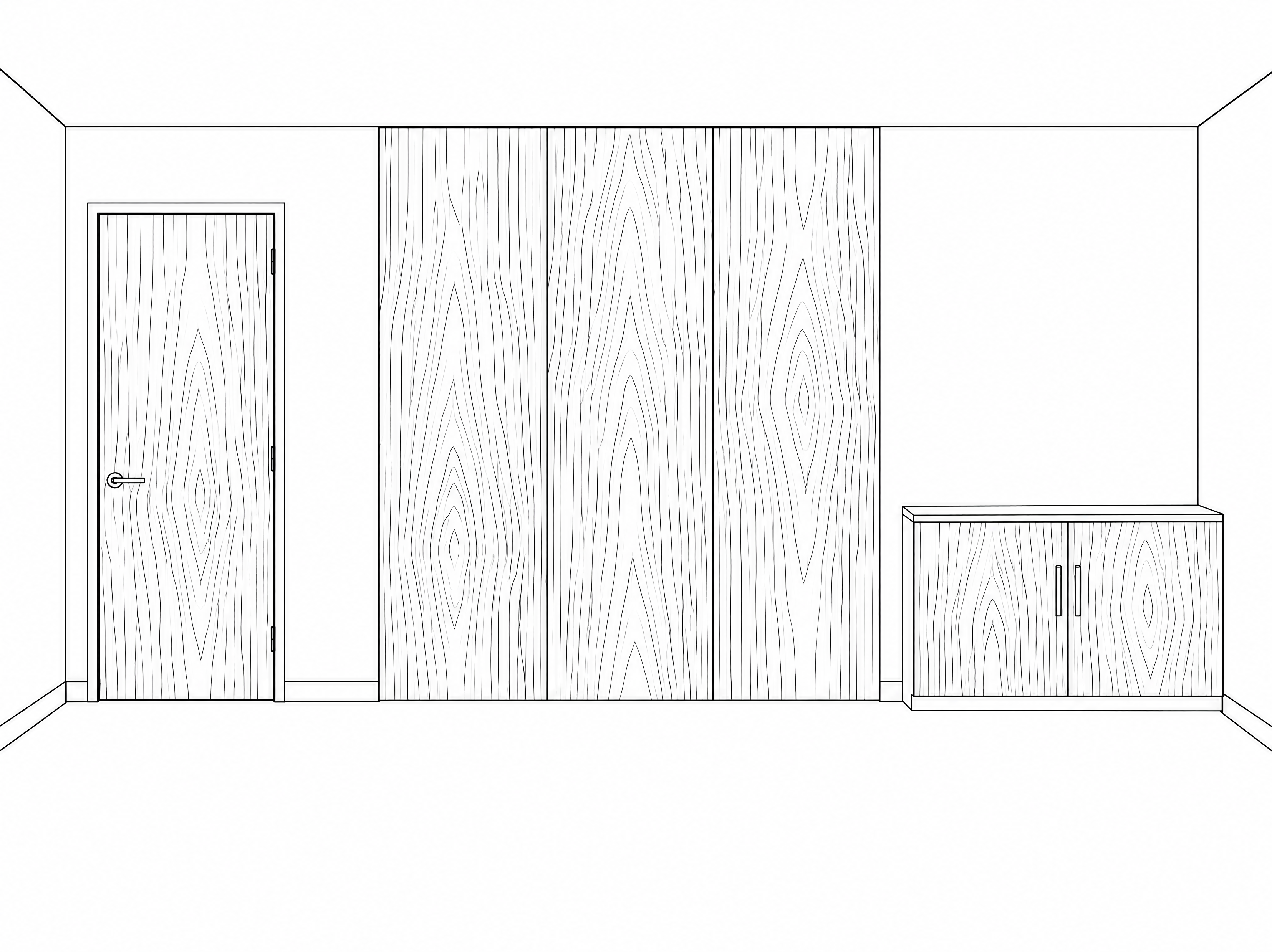
A coordination process in which veneer leaves are selected and sequenced across multiple doors, panels, and surfaces within a designated room to achieve consistent color, grain, and character throughout. Coordinated appearance, not exact grain continuity — and a distinction most specifiers miss until it's too late.
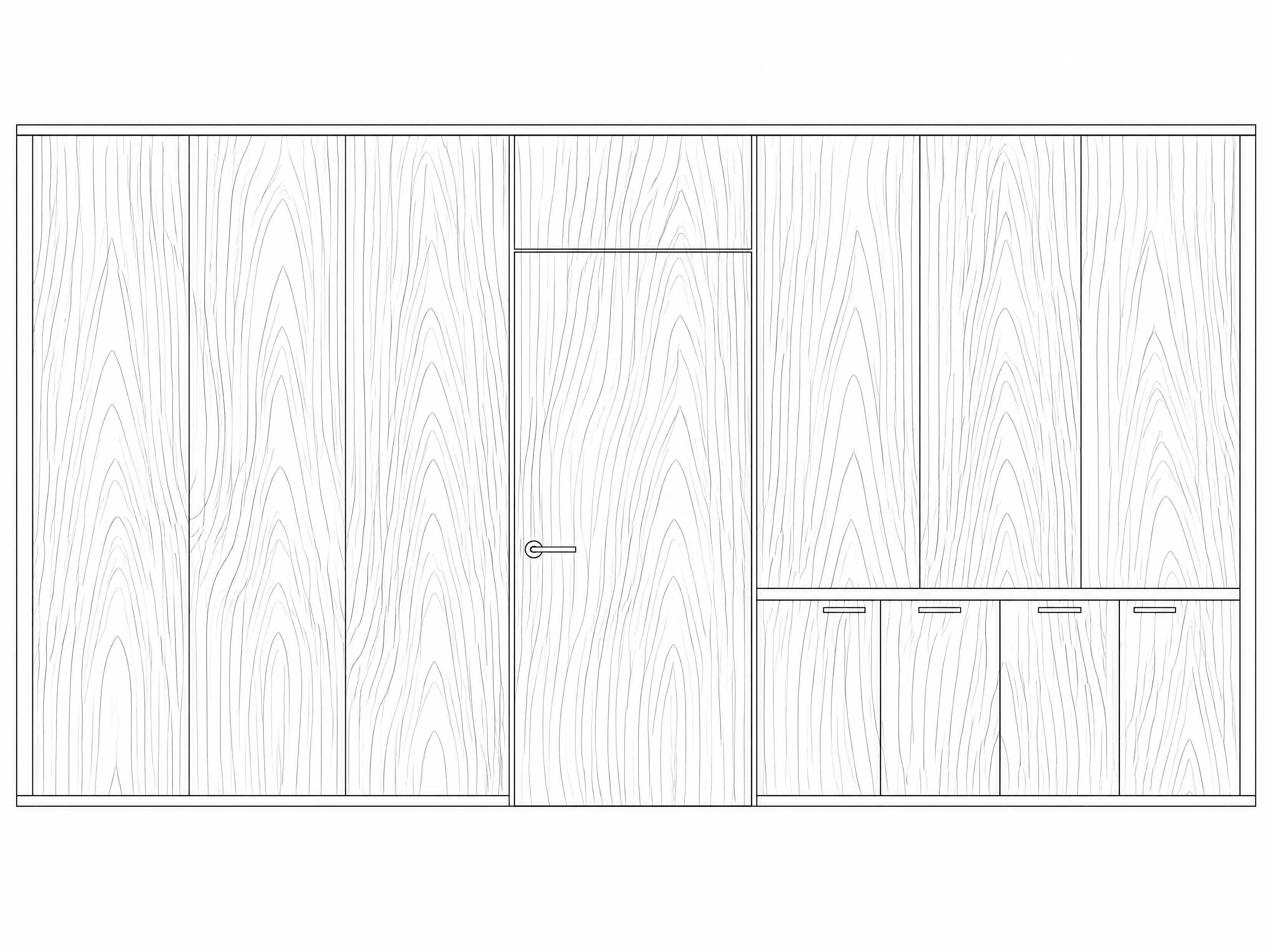
The specifier selects and sequences every leaf — a fully custom, seamless installation across panels and doors. Highest cost, highest risk, and significant coordination between three separate manufacturers. There's a smarter alternative worth knowing.