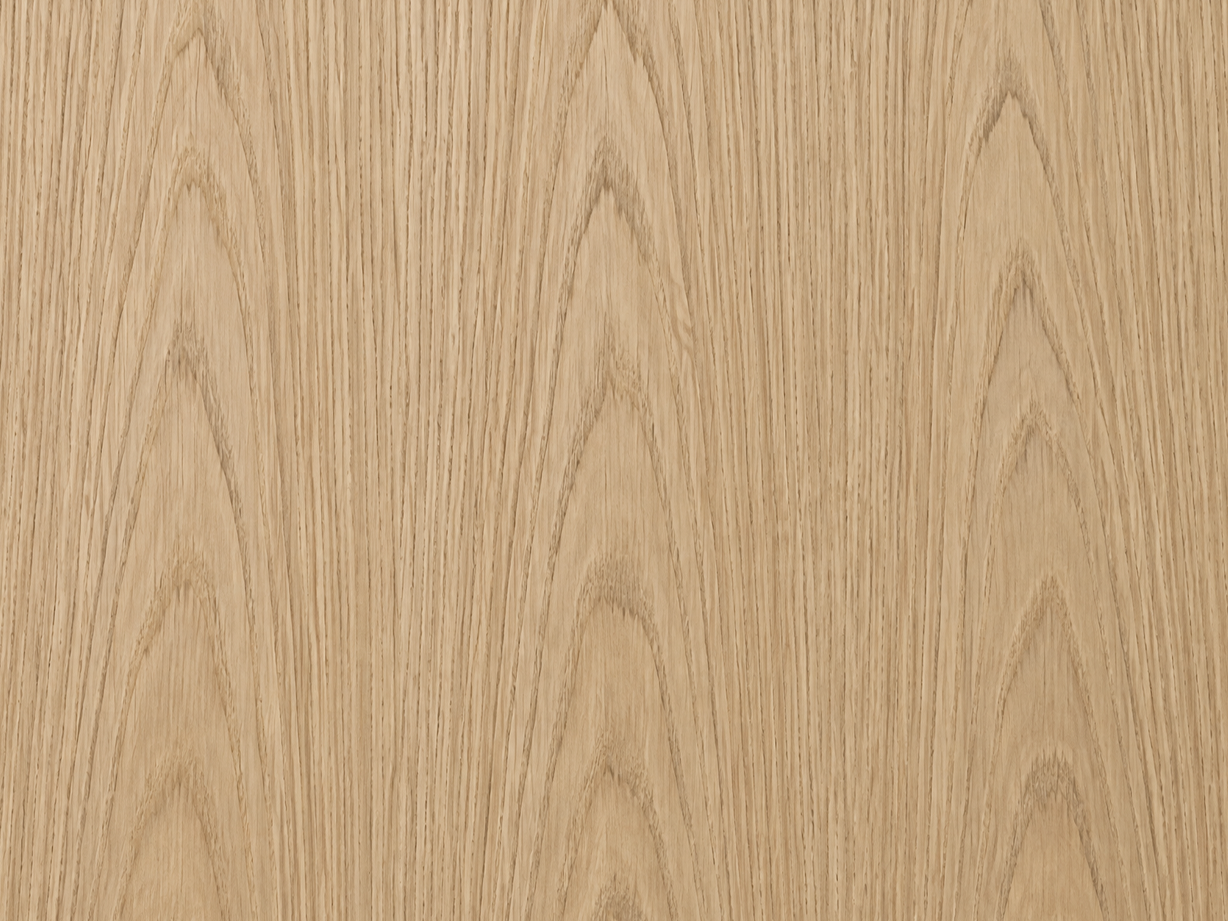
Plain Sliced (Default)
Default standard for versatile architectural interiors. Delivers warm, traditional cathedral movement with strong grain expression.
Wood Veneer | Species Overview
White oak offers a warm, neutral-to-golden wood appearance with a medium-coarse texture and prominent open grain — a versatile architectural choice for contemporary, transitional, and organic modern interiors.
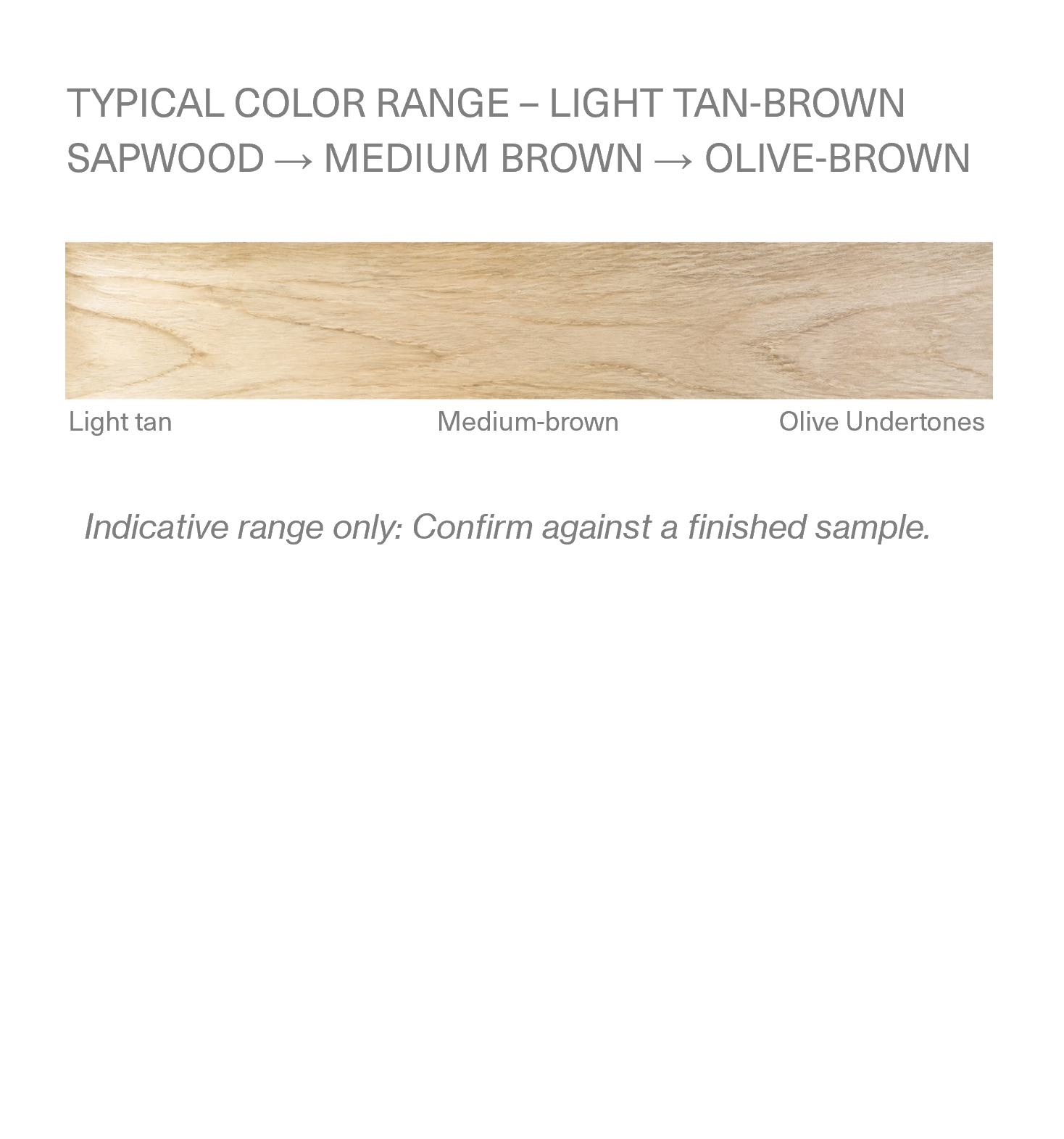
White oak offers a warm, neutral-to-golden wood appearance with a medium coarse texture and prominent open grain. It ranges from light tan to medium brown with subtle gray or olive undertones, giving the veneer a versatile architectural character that works in contemporary, transitional, and organic modern interiors.
It is one of the most widely specified architectural species because it balances warmth, grain character, and stain receptivity. Rift-cut and quarter-sliced options can create a more linear expression when a quieter face is desired.
Default cut
Default match
Pore structure
Relative cost
Texture | Medium coarse, open grain |
Color range | Light tan to medium brown, gray or olive undertones |
Cuts available | Plain Sliced (default), Rotary, Quarter Sliced, Rift Cut |
Relative cost | Moderate range |
Watch for | Ray fleck, tannin-driven tone shifts |
Neutral, versatile tones with subtle gray or olive undertones
White oak ranges from light tan to medium brown with subtle gray or olive undertones. Because it is generally more uniform than species with pronounced sapwood-heartwood contrast, it provides a versatile base for both clear and stained finishes. Natural tannins and log variation can still shift the final tone from leaf to leaf and from one production lot to another.
⚠ SPECIFICATION NOTE
White oak is not perfectly neutral. Natural gray or olive undertones may become more pronounced under clear finishes, and stain color can vary by cut and grain density.
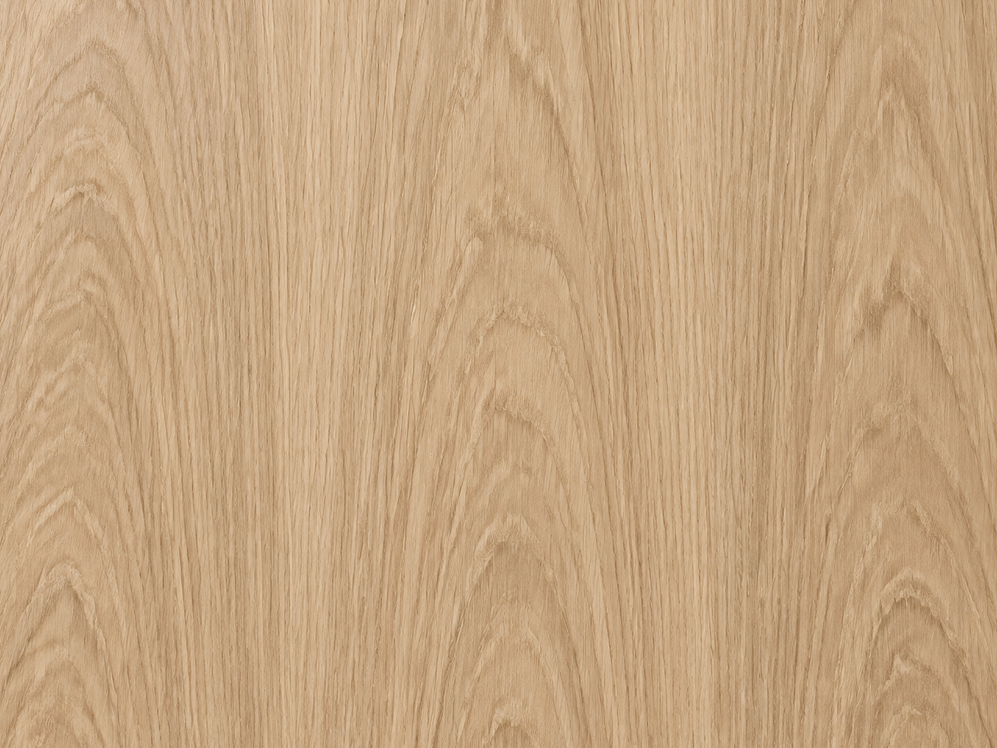
Medium-coarse and open, with grain that reads in clear and stained finishes
White oak has a medium-coarse texture with a strong, open-grain character that reads clearly in both clear and stained finishes. Plain sliced faces tend to show cathedral movement, while quarter-sliced and rift-cut faces provide a straighter, more linear expression. Quarter-sliced faces can also reveal ray fleck, a natural and often desirable feature of the species.
Adjacent leaves are mirrored in book matching. Where grain direction or subtle color differs between leaves, a gentle barber-pole effect may appear as an inherent characteristic of the match rather than a defect.
⚠ SPECIFICATION NOTE | STAIN ABSORPTION
White oak generally accepts stain well, but its open grain and natural tannins can influence how color develops across the face. Finish tone may vary with grain direction and cut, so evaluate the selected stain on a finished 8"x10" sample.
For a warmer species with a more pronounced red cast and more open, coarse grain, see the Red Oak Spec Brief. White oak is generally more neutral and versatile in contemporary applications.
Default standard for versatile architectural interiors. Delivers warm, traditional cathedral movement with strong grain expression.
Broad, flowing grain with active growth-ring patterns. Specified where a more expressive pattern is acceptable; less typical for white oak.
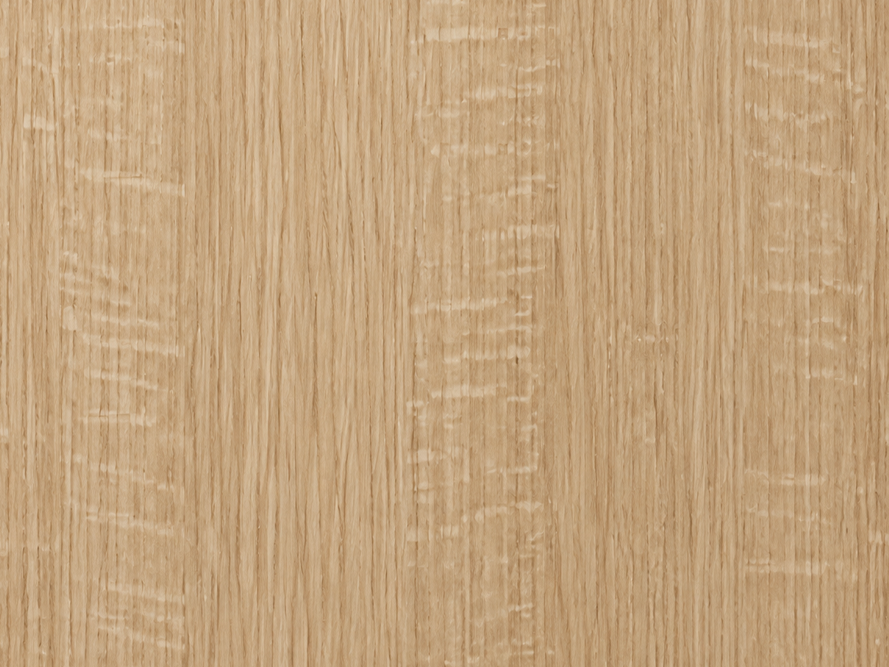
Straighter, more linear grain with potential ray fleck. Confirm that ray fleck is desired before specifying.

Straight, consistent grain with minimal ray fleck for a clean, linear appearance. Confirm species and availability.
These are inherent to the species. Their acceptance is governed by the applicable WDMA face-grade table together with the project's approved visual standard.
CHARACTERISTIC | APPEARANCE | GRADE CONSIDERATION |
|---|---|---|
Color Variation | Slight tonal shifts within a face or from door to door | Allowable by grade; define acceptable range explicitly |
Color Streaks | Subtle linear tone variations along grain direction | Allowable by grade; may be more visible with clear or light finishes |
Mineral Streaks | Faint darker lines or marks in the grain | Allowable by grade; confirm acceptable frequency in specification |
Figure | Irregular grain movement in occasional leaves | Not grade-controlled; can contribute to variation in appearance |
Ray Fleck | Visible fleck or flake, especially in quarter-sliced faces | Natural feature of white oak; specify whether it is desired or limited |
Cross Bars | Faint horizontal bands crossing grain direction | Natural characteristic; cannot be fully eliminated |
Barber-Pole Effect | Alternating light/dark leaves in book match | Natural result of book matching; should be anticipated in wide faces |
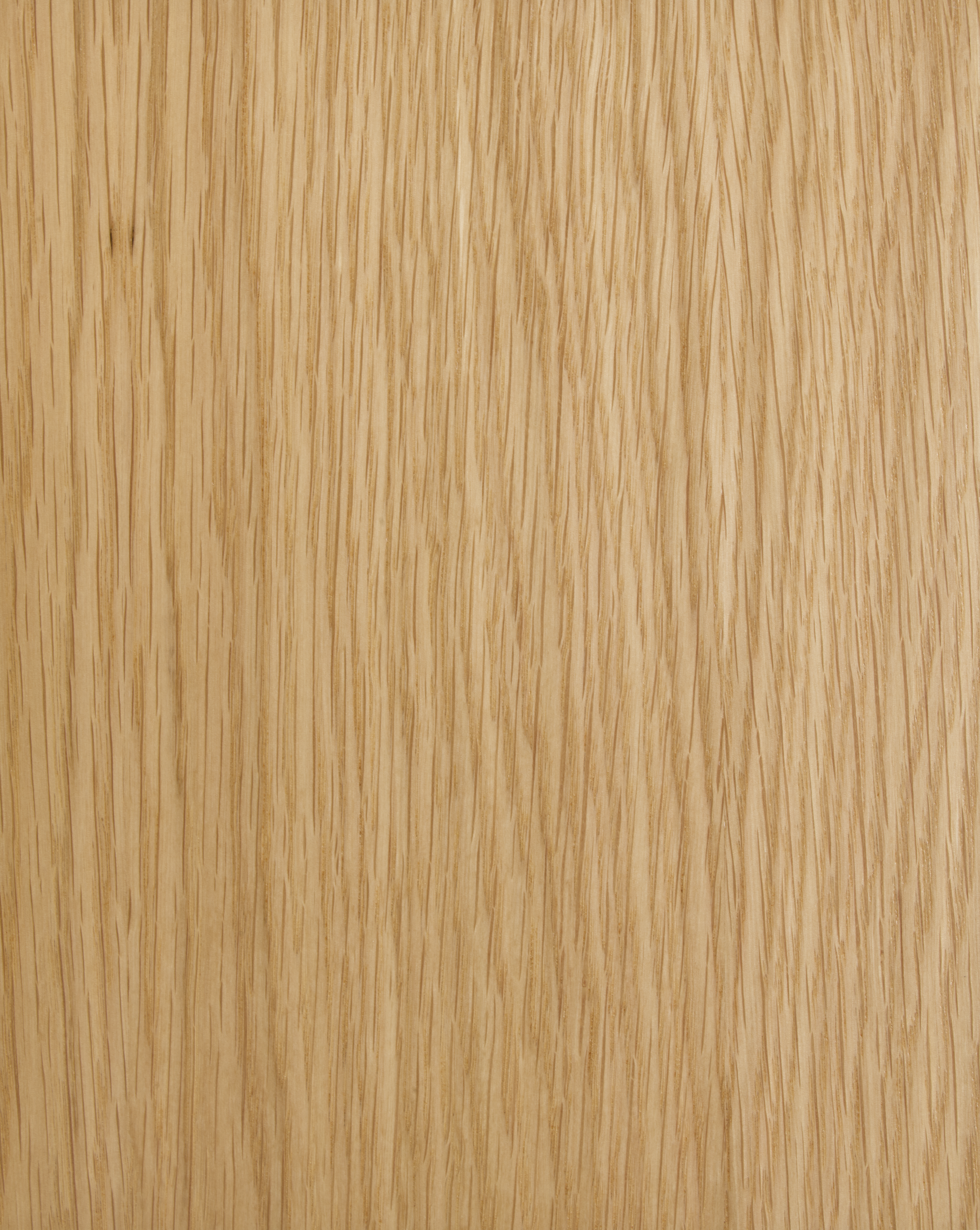
Shows the species’ natural tone, ray fleck, and open grain most clearly. Generally low risk if the goal is a light, honest oak appearance.
Most natural – Shows tone, fleck, and grain.
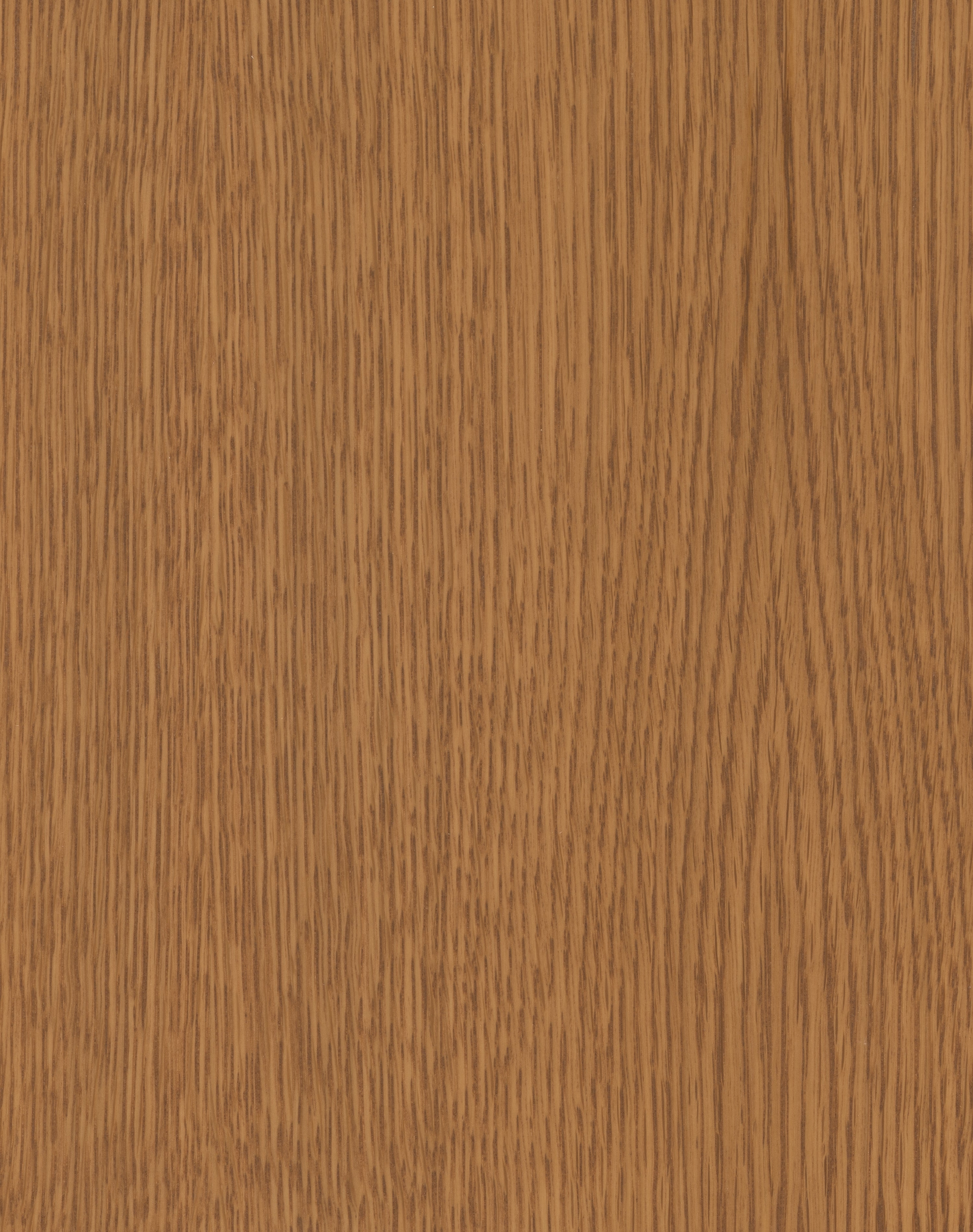
Balances warmth and contrast while still letting grain and ray fleck read. Confirm on a finished 8”x10” sample.
Balanced – Sample confirmation recommended.

Most effective at deepening color and softening tone variation, though open grain and tannin-driven shifts may remain visible.
Greatest tone control – Grain stays visible.
01
Quarter-sliced white oak can show ray fleck or flake created by the species’ medullary rays. The effect can be subtle or highly visible depending on cut, log, and lighting, and it may be desirable in some designs but distracting in others.
Recommended response
Specify whether ray fleck is desired, acceptable, limited, or prohibited. If a minimal-fleck appearance is required, consider rift cut and confirm the resulting grain direction with an 8"x10" sample.
02
White oak’s tannins can influence how stains and clear finishes develop, so identical finish formulas may read differently across cuts or production lots. Clear finishes may also reveal the species’ gray or olive undertones more clearly than expected.
Recommended response
Review the selected finish on the specified white oak cut and under representative lighting before final approval. Coordinate finish, stain, and sheen with the project team to make sure the desired tone is maintained.
03
Even though white oak is more controlled than many expressive species, slight color variation, grain movement, and book-match striping can still appear across a door face or group of doors. 2"x 4" samples cannot capture the full look of a coordinated installation.
Recommended response
Define the desired color range, grain direction, cut, and matching method explicitly in the project specification. Approve a finished 8"x10" sample or mock-up for visually sensitive areas before production begins.