Natural Characteristics of Wood Veneer
Natural Characteristics: Color & Tone
Understand how species selection, sapwood-to-heartwood balance, and finish response drive tonal contrast across openings.
- Color Variation
- Sapwood
- Heartwood
- Color Streaks
- Mineral Streaks

Overview
Wood’s color is shaped by the species, the mix of sapwood and heartwood, and the way the veneer responds to finish. These differences can create subtle tonal shifts or pronounced contrast across a door face and between openings. Understand what color selections actually establish—and what needs further coordination to achieve the intended appearance.
At-A-Glance
What Face Grade Controls | What Face Grade Does NOT Control |
|---|---|
Which natural characteristics are permitted (and at what size or frequency) | Overall color tone, undertone, or sapwood-to-heartwood ratio |
Species-specific allowances for features like pin knots, mineral streaks, and gum pockets | The prominence of figure, ray fleck, or cross bars |
A defined quality threshold — not a definition of appearance uniformity | Visual differences created by matching method, assembly method, lighting, or finish |
"Specifying AA instead of A narrows the permitted characteristics — it does not define the appearance."
Color & Tone
NaturalColorVariation
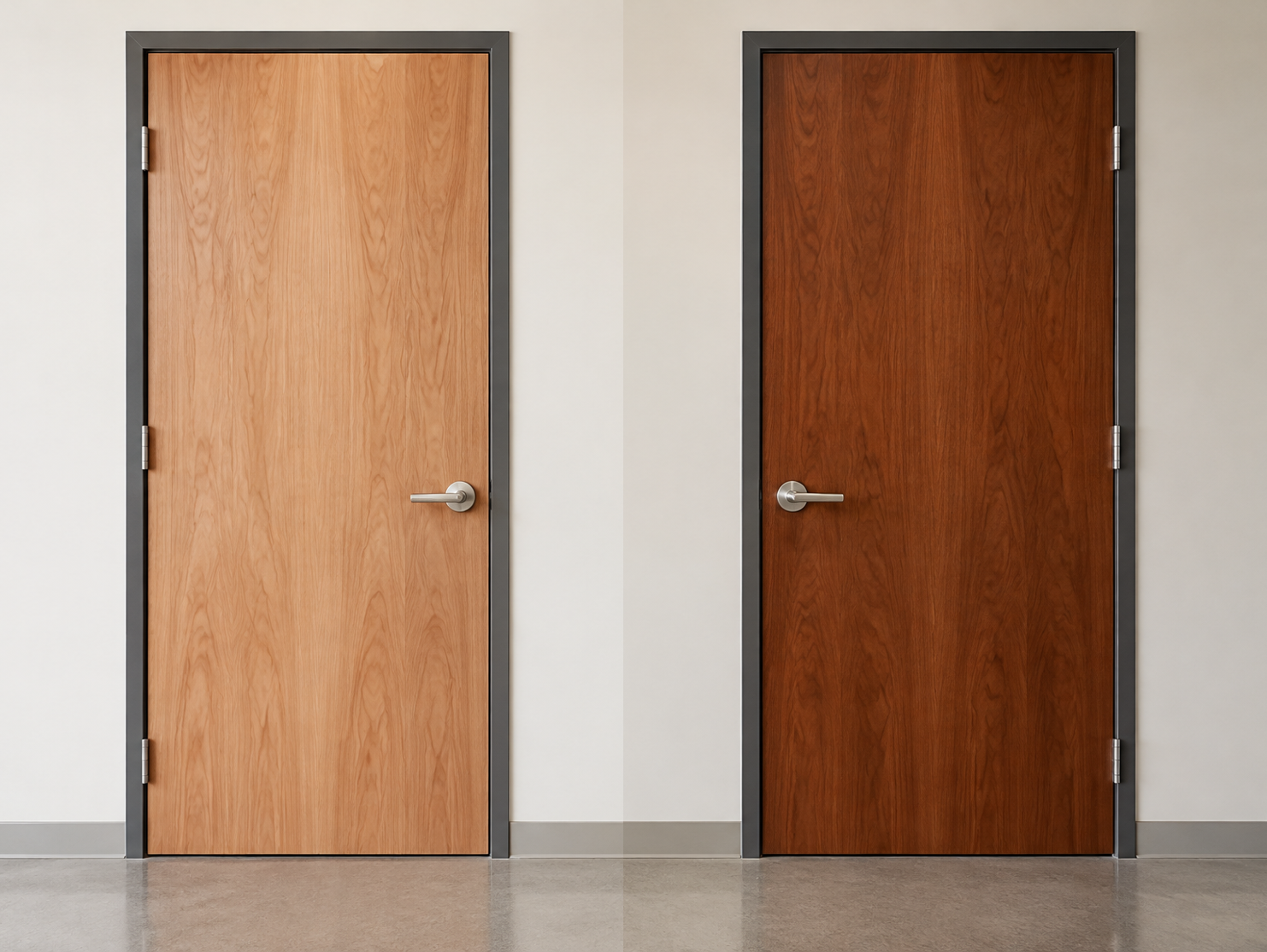
Natural color variation is the range of inherent wood tones found within a single species and the differences in color between species. Veneers of the same species can vary from lighter to deeper tones, while different species offer distinct color palettes. A species name establishes a general color expectation—not one exact shade.
TYPICAL APPEARANCE
Tonal differences may be subtle or pronounced, influencing how individual veneer leaves, full door faces, and adjacent doors relate visually.
Within-species range: Lighter, medium, or deeper tones within the same species.
Differences in undertone: Warmer, cooler, or more neutral coloration within a species’ natural palette.
Between-species contrast: Distinct color families that create contrast when different wood species are used together.
Specification Watch Outs:
01
The same species does not mean the same color.
Doors specified with identical species can still differ in overall tone.
Recommended response
Define whether the intent is general tonal compatibility or closer color coordination, and confirm the manufacturer’s ability to provide that selection before ordering.
02
The color in a species name does not guarantee its appearance.
“Red oak” and “white oak” identify species groups—not fixed veneer colors. White oak can have noticeable pink or reddish tones, and red oak is not uniformly red.
Recommended response
Specify the species separately from the desired tonal range. If minimizing pink or red tones is important, state that requirement explicitly and confirm available color selection with the manufacturer before ordering.
03
The same stain formula can look different over different wood undertones.
Warmer, cooler, or more neutral veneer tones influence the finished color, even when the stain formula stays the same. An approved sample provides a reference, but natural shifts in undertone mean production doors may not match it exactly.
Recommended response
Review a finished sample with natural tonal variation in mind. If tighter color consistency is essential, consider laminate or reconstituted veneer rather than expecting an exact match from natural veneer.
COLOR & TONE
ColorStreaks
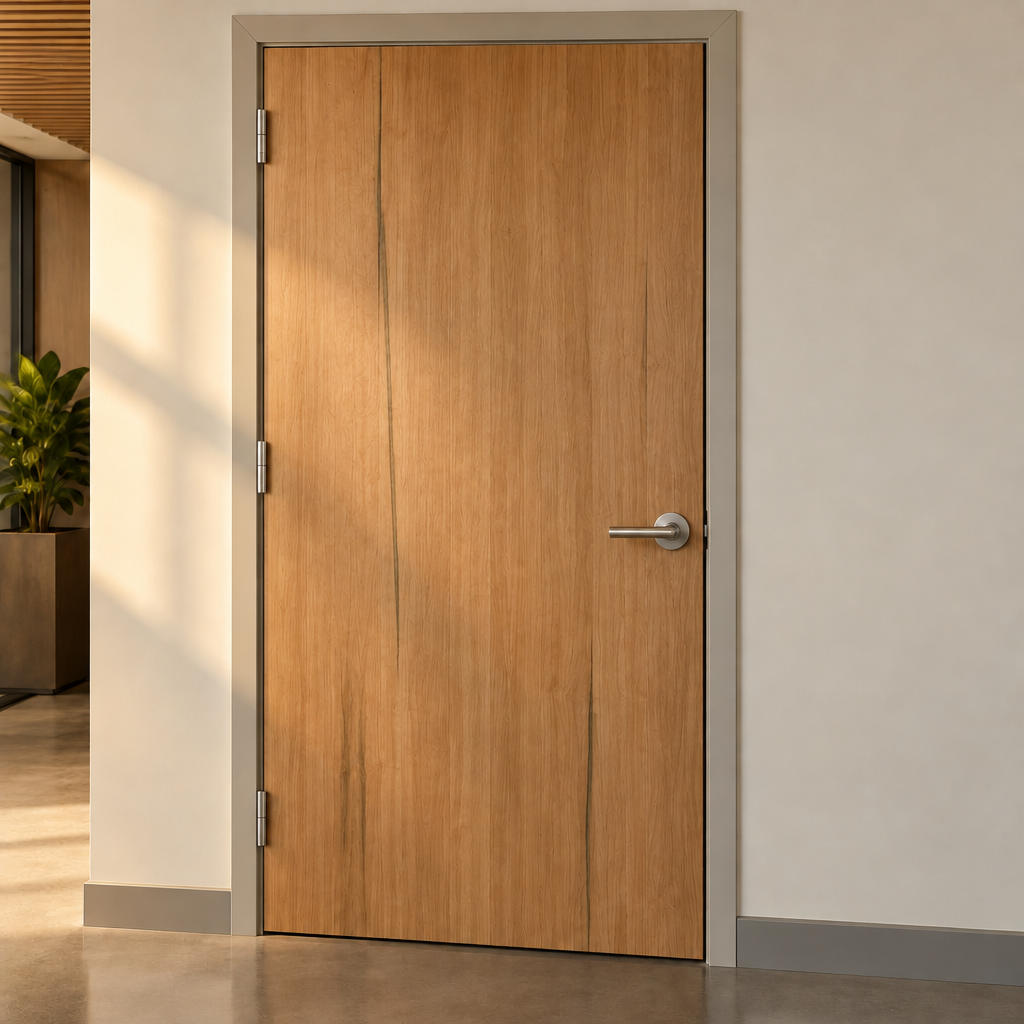
Color streaks are localized, natural variations in tone that run parallel to the grain within a veneer leaf. While architectural face grades regulate their prominence by species, even premium Grade AA and Grade A faces permit streaks—meaning higher grades do not guarantee a streak-free door.
TYPICAL APPEARANCE
Color streaks often follow the grain and can appear on isolated veneer leaves or across an entire door face. WDMA face grades define allowable limits, but variation can still be noticeable from door to door.
Fine mineral lines: Narrow, dark lines following the annual rings that contrast sharply against pale, closed-grain species like maple or birch.
Broad color bands: Wider swaths of natural pigmentation that are common and permitted across both AA and A faces in species like oak.
Localized clusters: Concentrations of streaks, gum pockets, or spots that may appear on one door leaf while adjacent doors remain relatively clear.
Color Streaks Specification Watch Out:
01
A general request for "consistent color" may not communicate whether distinct streaks are acceptable. Localized contrast is a different concern from overall tonal range.
Recommended response
Address localized streaks separately from overall color range when defining appearance requirements.
02
A higher face grade does not guarantee streak-free veneer. WDMA allowances vary by species, and even Grade AA may permit color streaks.
Recommended response
Review the applicable species and grade allowances; confirm any tighter selection requirements with the manufacturer before specifying.
COLOR & TONE
Sapwood&Heartwood
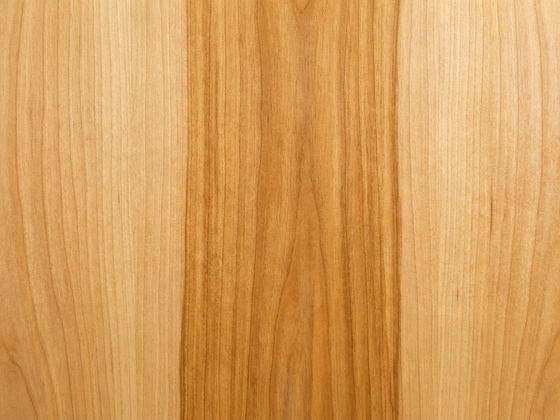
Veneer appearance naturally varies from log to log and flitch to flitch, but the proportion of sapwood to heartwood is often the primary driver of visual contrast. Depending on that mix, door faces can range from relatively uniform to sharply contrasting in tone and color.
TYPICAL APPEARANCE
These selections allow both sapwood and heartwood without a prescribed proportion. “Natural” does not guarantee a balanced blend or consistent color from door to door—even within the same hallway.
Natural birch: Light sapwood and darker heartwood can create pronounced color contrast.
Natural maple: Pale sapwood and darker heartwood can produce light, dark, or mixed appearances.
Natural ash: Light sapwood and brown heartwood can create noticeable tonal differences.
Sapwood/Heartwood Specification Watch Outs:
01
“Natural” does not guarantee a light or balanced appearance:
It permits both sapwood and heartwood without a fixed ratio, so contrast can be pronounced and vary significantly between doors.
Recommended response
Specify a color-selected veneer when contrast must be minimized: Specify "Select White" birch, maple or ash to restrict dark heartwood.
02
“Natural” describes veneer selection—not authenticity or finish.
In veneer grading, "Natural" strictly refers to how logs are sorted, permitting an unrestricted mix of light sapwood and dark heartwood. It does not imply raw, unfinished, or more authentic wood, and natural doors require the same factory clear or stain finishes as any color-selected veneer.
Recommended response
Treat "natural" as a sorting specification and define the finish separately: Clarify that "natural" only governs sapwood/heartwood inclusion, and explicitly specify the required factory finish, stain, and sheen level needed to protect the door and achieve the design intent.
03
Finish choice can soften—or emphasize—natural color variation.
Darker stains can help minimize contrast between light sapwood and dark heartwood, while clear finishes can make those differences more pronounced. Neither guarantees a uniform appearance.
Recommended response
Review finished samples that include both sapwood and heartwood to evaluate the proposed finish. If a more uniform appearance is required, discuss veneer selection with the manufacturer rather than relying on stain alone.
Color & Tone
MineralStreaks
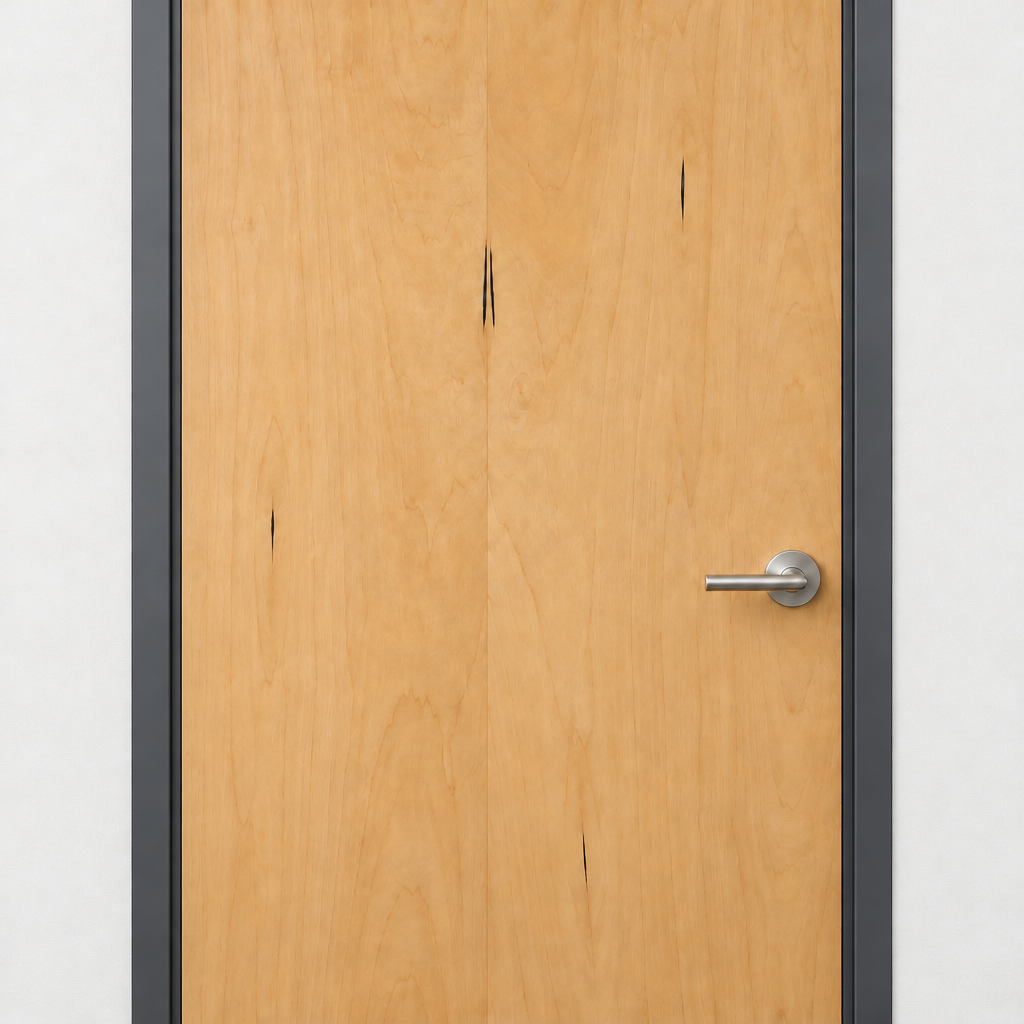
Mineral streaks are natural discolorations associated with mineral deposits in the wood, often appearing as darker lines or bands along the grain. Architectural face grades regulate their allowance by species, but a higher grade does not necessarily guarantee mineral-free veneer.
TYPICAL APPEARANCE
Mineral streaks may appear on individual veneer leaves or extend across several leaves on a door face. Their color, width, and concentration vary, creating noticeable differences between doors—even within the same species and finish.
Fine dark lines: Narrow brown, gray, or black streaks that can stand out against lighter surrounding wood.
Broader discoloration: Wider bands or patches that create more pronounced localized contrast.
Uneven distribution: Isolated or clustered markings that may be prominent on one door and minimal on another.
Mineral Streaks Specification Watch Out:
01
A general request for "consistent color" may not communicate whether distinct streaks are acceptable. Localized contrast is a different concern from overall tonal range.
Recommended response
Address localized streaks separately from overall color range when defining appearance requirements.
02
A higher face grade does not guarantee streak-free veneer. WDMA allowances vary by species, and even Grade AA may permit color streaks.
Recommended response
Review the applicable species and grade allowances; confirm any tighter selection requirements with the manufacturer before specifying.
Color & Tone
Oxidation
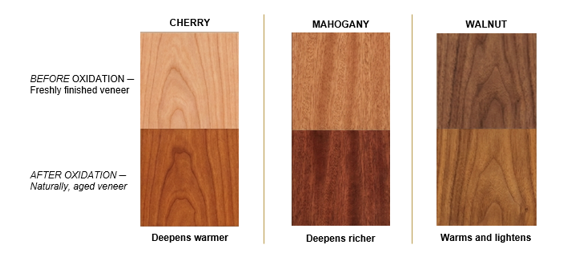
Oxidation is a natural process in which wood changes color over time as its natural compounds react with oxygen. Exposure to light can also influence color change. Depending on the species, veneer may become darker, lighter, or develop a different tone. A newly finished door represents the wood’s color at that moment—not necessarily its appearance over time.
TYPICAL APPEARANCE
Color changes may be subtle or pronounced, influencing how individual door faces and adjacent doors relate visually as they age.
Darkening or lightening: Wood may deepen or lighten in color over time, depending on the species and exposure conditions.
Changes in undertone: Some veneers may develop warmer, richer, or more muted tones as their color changes.
Uneven color change: Differences in light exposure or objects covering part of a surface may create visible variations in color over time.
Oxidation Specification Watch Outs:
01
Doors can change color before installation.
Exposure to light and air can cause veneer to change color. Doors stored under different conditions may develop visible variation before they are installed.
Recommended response
Keep doors in black polybags until ready to install to limit light exposure. Follow the manufacturer’s storage instructions and protect doors from moisture.
02
New doors may not match existing doors.
In renovations, repairs, phased construction, expansions, tenant improvements, and occupied facilities, new doors may be installed alongside doors that have darkened or lightened through years of light and air exposure. Even with the same species and stain, an exact match may not be possible—and both doors may continue to change over time.
Recommended response
Compare proposed veneer and finish samples with existing doors in the actual space. Discuss acceptable color differences with the manufacturer before finalizing the specification.
03
Signs can leave visible color differences.
Signs, notices, and other coverings shield portions of a door from light. Over time, the covered areas may differ in color from the surrounding veneer.
Recommended response
Consider where signs and other coverings will be placed. If they are moved or removed, expect a possible color difference between the covered and exposed areas.
Reduce Color Variation
To reduce color variation in wood veneer, consider these options: